Importing Handicrafts from China: A Complete Guide
Importing handicrafts from China: choosing the right production cluster, setting realistic MOQs, building inspection in, paying safely and clearing customs.
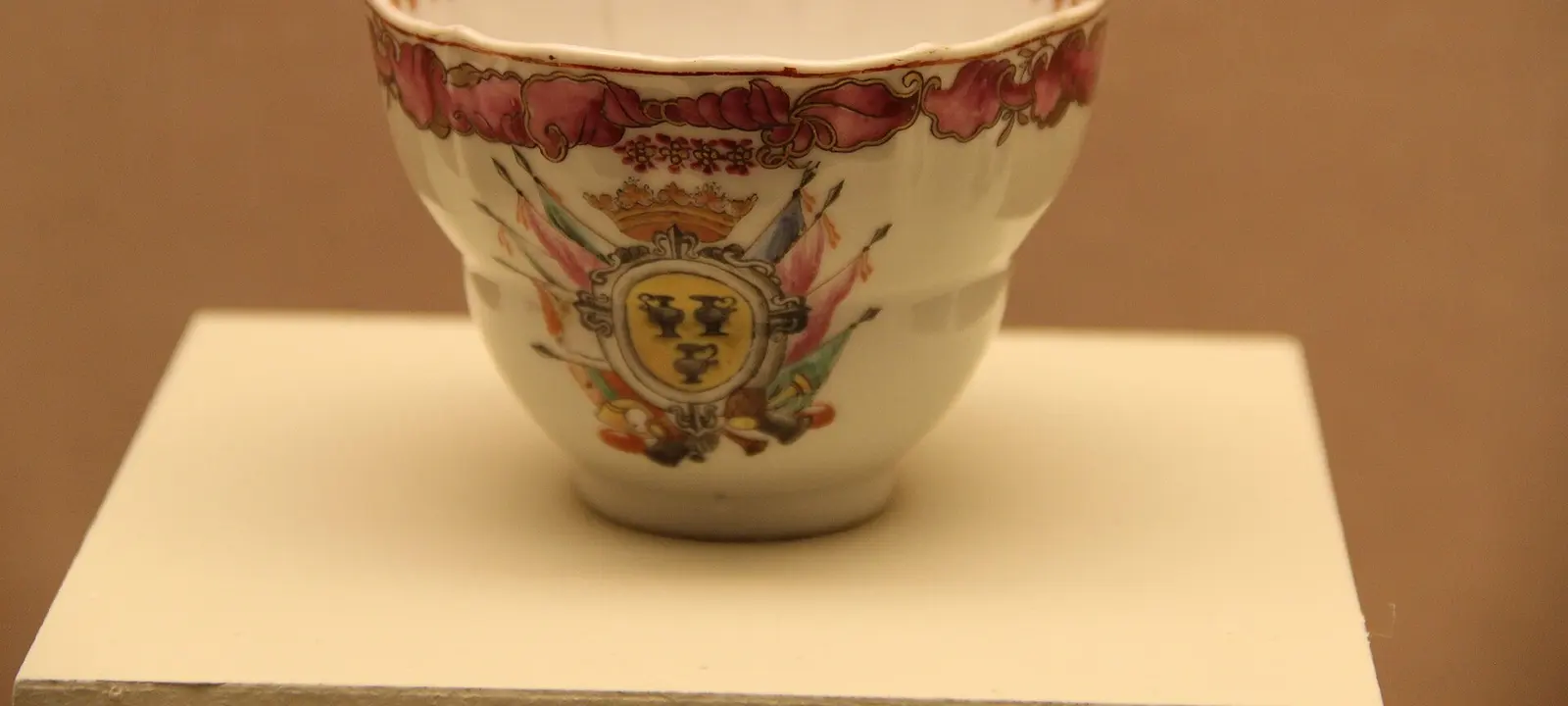
Importing handicrafts from China can be a strong margin play for buyers who plan sourcing, quality control, and customs compliance carefully. The key levers are choosing the right production cluster for each product, locking in realistic MOQs, building inspection routines, and using payment and shipping terms that protect your cash flow. Below is a practical, step-by-step view of how professional bulk buyers run the process from inquiry to delivered container.
Sourcing regions and what each cluster does best
China’s handicraft industry is highly regionalized. Matching your product to the right cluster usually beats chasing the lowest unit price.
- Jingdezhen, Jiangxi — porcelain, ceramics, and teaware. Deep artisan base plus modern factory capacity.
- Suzhou, Jiangsu — silk goods, embroidery, fans, and fine textiles; also strong for premium gift boxes.
- Yiwu, Zhejiang — small commodities at scale: ornaments, bamboo and wood items, jewelry, home décor. Ideal for mixed container loads.
- Quanzhou, Fujian — resin, stone, and ceramic gifts; strong OEM capability.
- Foshan, Guangdong — furniture, lacquerware, and lighting accents.
- Linyi, Shandong and Hebei clusters — wood, rattan, wicker, and woven baskets.
Plan a sourcing trip that hits two or three clusters per visit, or commission a China-based sourcing agent if travel is not practical.
Finding and vetting suppliers
Start on Alibaba and Made-in-China for breadth, then move to Global Sources, 1688 (via an agent for domestic-only factories), and trade shows such as the Canton Fair, East China Fair, and Domotex. For every shortlisted supplier:
- Request the business license, factory photos, and export records.
- Run a third-party credit and legal-entity check.
- Order reference samples from at least two suppliers per item.
- Validate social compliance if your retailers require it (e.g., BSCI, SEDEX, FSC for wood).
A signed NDA and a clear specification sheet covering materials, dimensions, tolerances, and packaging will save weeks later.
MOQ, pricing, and lead times
MOQs vary by material and process. Porcelain and resin often accept low MOQs on stock shapes but higher on custom molds. Hand-woven baskets and silk embroidery typically run higher because of labor content. Expect:
- Custom tooling or mold costs amortized into the unit price.
- Pricing tiers at common breakpoints (e.g., 500 / 1,000 / 5,000 units).
- Production lead times of 30–60 days after sample approval, plus 7–14 days for QC and consolidation.
Negotiate tiered pricing, packaging specs, and master carton weights/dimensions up front — they directly drive your per-unit freight cost.
Quality control
QC is the single biggest variable in landed cost. Build a routine:
- Pre-production sample signed off and archived.
- DUPRO (during-production) inspection at roughly 30–50% completion to catch early defects.
- Pre-shipment inspection (PSI) at 80%+ completion using AQL 2.5 for general goods or AQL 1.0 / 1.5 for premium ranges.
- Container loading supervision to verify carton counts and condition.
Use a third-party inspector (e.g., AsiaInspection, SGS, Bureau Veritas, TUV) when the order value justifies the fee, generally in the low-thousands USD per visit.
Payment terms
The standard ladder, from safest for you to safest for the factory:
- 30% T/T deposit, 70% balance against scanned B/L copy — the most common workable structure.
- Irrevocable L/C at sight for larger or first-time orders; more expensive but bank-backed.
- OA 30/60/90 is rare for handicrafts and usually reserved for established accounts.
- Use PayPal only for samples, not production runs.
Keep deposit and balance flows traceable to the supplier’s company account, never a personal one.
Shipping and logistics
For most handicraft orders, FCL (full container load) by sea is the most cost-efficient once volumes justify it. LCL works for mixed-product buyers and lower volumes but carries higher per-unit handling risk. For samples and small reorders, DHL, FedEx, or UPS are standard. Decide between FOB, CIF, and DDP:
- FOB is usually the best default — you control the carrier and freight cost.
- DDP is convenient but obscures duty/VAT exposure and ties you to the supplier’s broker.
- CIF is fine if you do not yet have a freight partner.
Plan port-to-port transit of roughly 20–35 days from major Chinese ports (Ningbo, Shanghai, Shenzhen) to the US West Coast, and 28–40 days to Northern Europe. Add buffer for peak shipping months.
US customs and duties
US imports are administered by U.S. Customs and Border Protection (CBP). Duty rates depend on the Harmonized Tariff Schedule (HTS) classification and country of origin, and can be zero for some goods but meaningful for others (textiles, wood, and certain decorative articles often attract duty). You will also need:
- A Customs Bond (single-entry or continuous) when the entry value exceeds the applicable threshold.
- An Importer of Record (you, or a licensed customs broker acting on your behalf).
- Accurate commercial invoice, packing list, and country-of-origin marking.
- For regulated categories (wood, lead glazes, textiles), check with the Consumer Product Safety Commission (CPSC) and FTC labeling rules.
Verify current de minimis thresholds, applicable HTS duty rates, and any product-specific requirements directly with CBP and the relevant federal agency before placing each order.
EU customs and duties
EU imports clear through the national customs authority of the country of importation (e.g., German Zoll, French Douane, Italian Agenzia Dogane), using the EU TARIC database for duty rates and the Union Customs Code (UCC) for procedure. You will need:
- An EORI number for the importer.
- A commercial invoice, packing list, CMR or B/L, and a valid HS classification.
- Payment of import VAT (rates vary by member state) plus applicable duties.
- A Customs Representative if you are not established in the EU.
Verify current TARIC duty rates, VAT rates, and product-specific rules (wood, textiles, antiques) with the competent national customs authority and the European Commission’s access2markets portal.
Documentation checklist
Before the goods leave the factory, confirm you have:
- Signed purchase order and PI matching the proforma invoice.
- Pre-shipment inspection report.
- Commercial invoice, packing list, and certificate of origin where applicable.
- B/L or AWB, fumigation certificate (if wood packaging), and material test reports where required.
- CPSC, REACH, or other compliance certificates tied to your retail market.
Bottom line
Treat handicraft sourcing from China as a structured procurement program, not a one-off purchase: pick the cluster that owns your category, qualify two suppliers per item, and enforce AQL-based inspections. Standardize on FOB terms with a 30/70 T/T structure, and confirm HTS classification, duty exposure, and de minimis rules with CBP (US) and the competent national customs authority (EU) before each order. The buyers who win are the ones who control quality and paperwork — not the ones who chase the cheapest quote.
Note: This guide is general information for planning, not legal or customs advice. Rules change — always confirm current requirements with the relevant customs authority or a licensed broker before you ship.
FAQ
What MOQs should I expect when sourcing handmade handicrafts from China?+
MOQs vary significantly by product and supplier—artisan workshops in regions like Jingdezhen or Suzhou may accept trial orders of a few dozen pieces, while larger factories often require several hundred units per design. Custom designs typically carry higher minimums than stock items, so always confirm the MOQ in writing before placing an order.
How can I ensure consistent quality when importing handmade goods from different Chinese regions?+
Handmade items naturally vary piece to piece, so agree on acceptable tolerance levels (color, size, glaze, weave) with your supplier upfront and document them in the purchase contract. Pre-shipment inspections by a third-party QC firm—or a sourcing agent based in the specific craft region—are strongly recommended for high-value shipments.
What customs duties and import requirements apply to handicrafts entering the US or EU?+
Duty rates depend on the HS code and material—porcelain, silk, wood, and metal crafts each fall under different tariff classifications with varying rates under the US HTSUS and EU CN systems. Some handicrafts may also require certificates of origin, CITES permits (for wood or ivory-derived items), or REACH compliance documentation in the EU, so consult a licensed customs broker before shipping.
Ready to source?
Give GreenFlip your buying brief, budget and deadline. We turn it into an evidence-backed sourcing decision and an executable order.
Start a sourcing brief →