The Handmade Rug Buying Guide for Importers
A buyer's guide to importing handmade rugs (kilim, Berber, hand-knotted): knot density, materials, sizing, GoodWeave, MOQ, and quality inspection
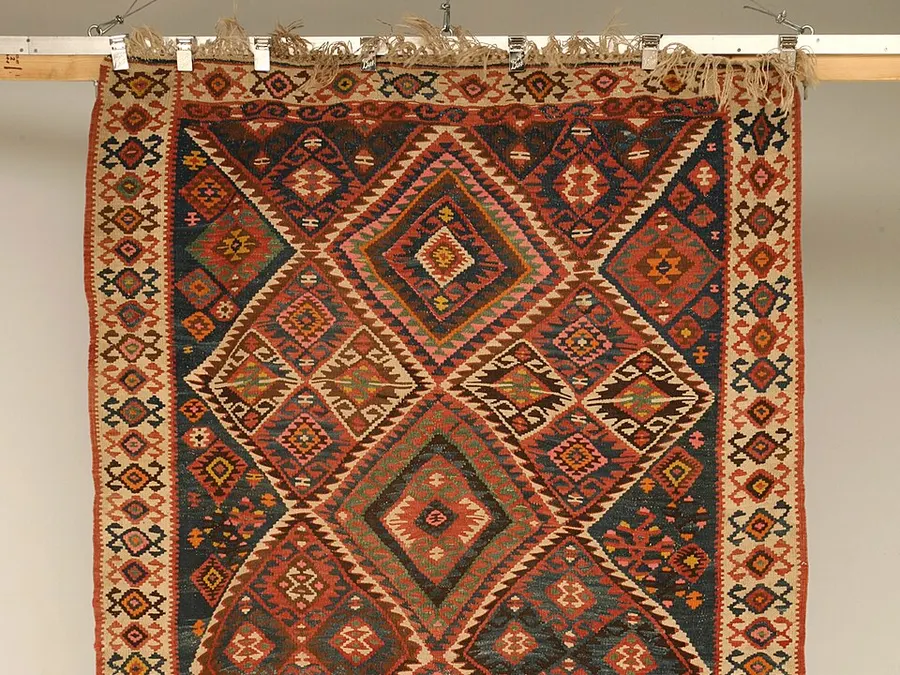
Sourcing handmade rugs means balancing three trade-offs on every order: knot density, material, and origin. Get those right, layer in ethical certification and a realistic MOQ conversation, and the rest — quality inspection, lead time, landed cost — becomes much easier to manage.
Knot density and what it actually tells you
Knot density, measured in knots per square inch (KPSI) or knots per square decimeter (knot/dm²), is the most common shorthand for a rug’s quality tier. As a rough orientation:
- 40–100 KPSI: tribal, Berber, and coarser village weaves. Chunky, durable, character-driven.
- 100–200 KPSI: standard hand-knotted production. The workhorse range for most importers.
- 200–400+ KPSI: fine urban or city rugs, often Persian or Indian silk-blend work. Detail-rich, much higher labor cost.
Don’t treat KPSI as the only quality signal. A dense weave with sloppy wool or poor dyeing will still be a bad rug. Conversely, a 70 KPSI Berber with clean wool and natural dye can outlast a careless 250 KPSI piece. Use density as a price-and-positioning input, not a verdict.
Materials: wool, silk, cotton, and the rest
The pile and foundation material drive both feel and price.
- Wool: the default for most hand-knotted rugs. Look for hand-spun, highland or New Zealand wool where possible. Looser spinning feels softer; tight spinning wears longer.
- Silk: bright, fine, and expensive. Real silk takes a precise knot; if a “silk” rug feels plastic-smooth or weighs too much, test it.
- Cotton: typically the foundation warp and weft, sometimes the pile in flatweaves and dhurries. Adds structure.
- Jute, sisal, hemp: flatweave kilims and Berber bases. More prone to moisture issues in container shipping.
- Viscose and bamboo silk: common substitutes. They’re not durable and often mislabeled. Specify clearly in the contract if you accept them.
Ask suppliers to declare fiber content in writing, and cross-check against a burn test on pre-shipment samples.
Sizing, tolerances, and how to specify
Rugs are sold in feet in Western markets and in centimeters across most producing countries. Standard sizes cluster around 2×3, 4×6, 5×7, 6×9, 8×10, 9×12, and 10×14 ft (roughly 60×90, 120×180, 150×215, 180×275, 240×305, 275×365, 305×425 cm).
Because every rug is hand-made, expect a tolerance of roughly 2–5% on each dimension. Bake that into your product listings and your shipping calculations. For custom sizes, confirm whether the supplier charges by the square foot, the running foot, or a fixed setup fee — and ask for the pattern repeat so you can scale your own photography and staging.
GoodWeave and ethical sourcing
GoodWeave is the most recognized certification for rugs, focused on eliminating child and forced labor in the supply chain. Certified rugs carry a numbered label that lets you trace the loom of origin. For buyers supplying retail, hospitality, or corporate contracts with ethics clauses, GoodWeave-label inventory is often a non-negotiable.
Other markers to ask about: Fair Trade Federation membership, supplier-side social audits (SMETA, BSCI), and origin documentation. In several major importing regions, due-diligence rules on forced labor are tightening — treat the supplier’s own documentation as part of the product, not paperwork after the fact. Verify current import requirements, including any due-diligence obligations, with your national customs authority (for example, U.S. CBP, UK HMRC, or the European Commission).
MOQ, lead time, and production realities
Handmade production is not a print run. Realistic MOQ ranges:
- High-end hand-knotted (Persian, Tibetan, fine Indian): often 1–5 pieces per design, because each rug is a separate commission.
- Mid-tier hand-knotted and hand-tufted: 10–50 pieces per design.
- Hand-loomed kilims and dhurries: 50–200 pieces is common.
- Flatweave Berber (Moroccan and similar): often 20–100 pieces per size, with high variance between cooperatives.
Lead times run from about 6 weeks (small kilim orders) to 9–12 months (large fine-knot orders), plus 4–6 weeks for ocean freight. Confirm whether the quoted price is FOB, CIF, or DDP and what currency the deposit is held in.
Quality inspection: a pre-shipment checklist
A 30-minute inspection per container can save a 30% return rate. Use this checklist on the first 10–20% of each production lot:
- Front and back: pattern is symmetrical, knots consistent, no obvious bald patches.
- Edges and fringes: straight, secured, not fraying.
- Color: consistent across the lot, no bleeding when a damp white cloth is pressed to a colored area.
- Smell: musty or chemical odors suggest storage or finishing problems.
- Size: measure three rugs per design against the spec; confirm tolerance.
- Knots: gentle pull test — knots should not slip.
- Labeling: country of origin, fiber content, and any certification marks are present and accurate.
Photograph and document defects. Hold shipment until corrected or until you agree a discount and a clear A-grade/B-grade split.
A worked example: spec’ing a 6×9 wool hand-knotted order
Imagine you want a 6×9 ft (≈180×275 cm) hand-knotted wool rug for a mid-market retail line. A defensible spec to send to suppliers:
- Construction: hand-knotted, Persian or Turkish knot, 120–160 KPSI.
- Pile: hand-spun wool, undyed or low-impact dyed; cotton warp and weft.
- Size: 6×9 ft, ±3% tolerance.
- Lead time: 10–14 weeks, including 2 weeks of pre-shipment buffer.
- MOQ: 30 pieces per design, 60 pieces total across two designs.
- Certification: GoodWeave label, social audit report on request.
- Price terms: FOB origin, USD, 30% deposit, 70% against copy of B/L.
- Inspection: third-party pre-shipment check on 15% of lot, AQL 2.5.
Sending this kind of document — not just a photo and a price — is the single biggest leverage point an importer has on quality and on price.
Bottom line
The best handmade rug orders start with a clear spec — fiber, construction, density band, size, certification — and a supplier who can answer each line in writing. Insist on pre-shipment inspection, accept reasonable size tolerance, and treat GoodWeave or equivalent documentation as part of the product. The rugs that age well in your catalog are the ones where the importer treated the craft — and the paperwork — with equal respect.
FAQ
What minimum order quantities (MOQs) should I expect when importing handmade rugs?+
MOQs vary by rug construction and country of origin. Hand-knotted rugs generally require higher minimums per design than flatwoven kilims because of longer production times, and most exporters will accommodate new buyers with mixed container loads combining different sizes, designs, or qualities to meet practical shipping volumes.
How should I verify knot density and overall quality before accepting a shipment?+
Pre-shipment inspection should measure knots per square inch (KPSI), check pile height consistency, color fastness, and the integrity of edges and fringes against an approved hand sample. Most importers use third-party inspectors such as SGS, Intertek, or a specialized textile QC firm applying AQL-based sampling, particularly when working with a new supplier.
Why does GoodWeave certification matter when sourcing handmade rugs?+
GoodWeave certification confirms the rugs were produced without child or forced labor through independent audits of certified workshops. Many major retailers in the EU, North America, and Australia require it as a condition of supply, and it gives importers documented proof of ethical sourcing for ESG and corporate compliance reporting.
Ready to source?
Give GreenFlip your buying brief, budget and deadline. We turn it into an evidence-backed sourcing decision and an executable order.
Start a sourcing brief →