Negotiating MOQ and Pricing with Artisan Suppliers
Practical tactics for negotiating MOQ, unit price, and payment terms with artisan and export-house suppliers without damaging the relationship
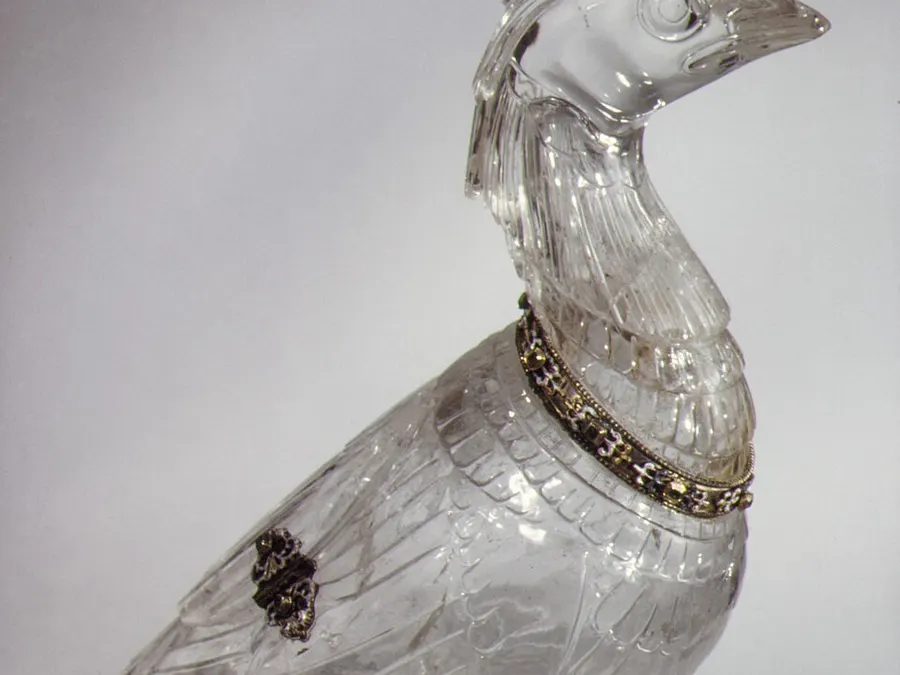
Handicraft suppliers — small workshops, family studios, and export houses that aggregate artisan output — rarely have the same cost flexibility as a mechanized factory, but they are usually more willing to negotiate MOQ and price when the conversation respects how they actually work. The strongest negotiations start with real cost transparency, then move to creative volume and payment structures that protect both sides.
Map the supplier’s real cost before you negotiate
Artisan pricing is driven by labor hours per piece, skill level, raw material yield, and finishing complexity — not by line items in a factory P&L. Before asking for a lower price, ask the supplier to walk through the build-up: cutting/sewing/weaving time, material wastage, dyes or glazes, surface treatment, QC, and packing. Most artisan suppliers will share this if the request is framed as “help me understand” rather than “justify your price.”
What you’re looking for:
- Where the cost is genuinely negotiable (e.g., dye batches, fabric yield, finish options)
- Where it isn’t (skilled hand-stitching, fair labor wages, safe materials)
- Whether MOQ pressure points are material minimums (a kiln load, a dye vat, a loom setup) rather than arbitrary floors
If a supplier won’t share the cost breakdown, that’s a signal — but it may simply be cultural. Offer to share your target landed cost and ask what configuration gets you there.
MOQ tactics that don’t backfire
Hardball MOQ demands (“just do 200 instead of 500”) usually fail because the supplier’s smallest economical run is fixed by physics or workflow, not by preference. The lever is to change the run, not just shrink it.
- Split one MOQ across SKUs. Take the 500-piece minimum as 200 in design A, 200 in B, and 100 in C. Tooling and setup costs are absorbed once; the supplier cares less about per-SKU volume.
- Stagger production. Order 300 now and 200 in 60 days. Cash flow for the artisan stays intact, and you get a chance to test sell-through before committing the balance.
- Run a first-article pilot. Pay a small premium for a 50-piece pilot to lock in quality and finish, then commit to the full MOQ at the standard tier.
- Aggregate with other buyers. If your export-house aggregates artisan clusters, ask whether a consolidated container with another buyer’s order can meet MOQ economics without you absorbing full volume.
- Tie MOQ to a reorder. A written commitment to a second order at agreed terms often unlocks a lower first-order MOQ than a one-off ask.
Pricing tactics that hold up
Price is usually easier to move than MOQ — but only if you give the supplier a reason.
- Reference three comparables. Show prices from two competing suppliers (real or realistic) and a published wholesale benchmark. Ask the supplier to meet or explain the gap.
- Ask for tiered pricing on paper. A quote for 500, 1,000, and 2,500 units forces the supplier to show the marginal cost curve and reveals where margin is padded.
- Index to a raw material. For natural fiber, leather, hardwood, or metal work, tie a portion of the price to a public commodity or local spot price with a 30-day reset. This protects both sides against sudden moves.
- Pay for tooling, get a price break. If you fund a custom mold, block print, or dye formula, you can legitimately ask for a lower per-piece price in exchange — and recover the tooling cost on the first reorder.
- Trim the spec, not the wage. Drop a second colorway, simplify packaging, or accept slightly larger tolerances. Never push the unit price below fair labor — it won’t stick, and it damages the cluster long-term.
Payment terms are part of the price
A 30/70 split feels standard, but artisan clusters often can’t float large material purchases on a thin deposit. Paying a higher deposit can earn you a better unit price than squeezing the supplier on the same quote line.
Common structures in handicraft sourcing:
- 30% deposit, 70% on pre-shipment inspection pass
- 50/50 when material costs dominate the build-up (metal, leather, hardwood)
- Irrevocable LC at sight for first-time orders over a meaningful value
- 30% deposit, balance against copy of B/L after on-time vessel sailing
- Milestone payments for multi-month custom projects (e.g., 30/30/40)
Match structure to risk: more deposit when the supplier is buying custom inputs on your behalf; less deposit on repeat orders with proven QC and a track record.
Worked example: 800 handwoven baskets
A buyer wants a fair-trade seagrass basket at MOQ 1,000 and $4.80 landed. The supplier’s real minimum efficient run is 800 pieces (one full dye batch plus a 5% overage allowance).
- Buyer asks for a cost breakdown: materials 35%, labor 40%, finishing 12%, overhead 8%, margin 5%.
- Buyer offers to split into 500 standard + 300 in a new shape, keeping the supplier at one setup. Supplier agrees.
- Buyer commits to a 60% deposit so the supplier can buy raw seagrass in one truckload, saving roughly 4% on material. New target price: $4.55.
- Buyer requests tiered pricing: 1,000 pcs $4.55, 2,500 pcs $4.25, 5,000 pcs $4.05.
- Final: $4.55 on the first PO, 60/40 payment, with a seagrass spot-price index for the second order.
No one “won” — both sides absorbed something, and the second order is now easier than the first.
Protecting the relationship for the second order
The most expensive negotiation is the one that locks in a great price on order one and a dead supplier on order two. Treat the first PO as a working agreement, not a one-off squeeze.
- Communicate in writing, confirm in person. Export-house owners often have a junior running email. Get the decision-maker on a call before finalizing terms.
- Give realistic forecasts. Telling a supplier you’ll run 10,000 units a year when you mean 3,000 burns trust fast and shows up in their planning.
- Pay on time, every time. Late payment from a Western buyer is the single most common reason artisan clusters quietly drop accounts.
- Visit at least once. A two-day workshop visit during production is the highest-ROI relationship investment you can make, and it surfaces issues email never will.
- Document specs in a single source. A signed tech pack with materials, dimensions, finish, tolerances, and QC criteria prevents the most common dispute: “we made what we always make.”
Bottom line
Strong MOQ and price negotiations with artisan suppliers come from understanding the real cost stack, then using creative structure — split SKUs, staggered runs, indexed pricing, and tailored deposits — to get the unit economics you need without forcing the supplier below their floor. Price is negotiable; fair labor and minimum-efficient-run economics usually aren’t. Protect the second order as much as the first, and your supplier will meet you halfway on the third.
FAQ
How do I negotiate a lower MOQ on my first order without offending an artisan supplier?+
Frame a smaller first run as a trial order and present a clear volume roadmap showing how quantities will scale over the next 2–3 seasons. Offer compensating concessions such as a larger deposit, faster payment, or accepting a slightly higher unit price, since most workshops will accept a modest first run if they see a credible path to repeat business.
What is the most effective way to push back on a quoted unit price without damaging the relationship?+
Anchor your counter to a specific cost driver (materials, hand-labor hours, finishing, or export packing) rather than asking for a blanket discount, and back it up with a comparable reference quote where possible. This keeps the conversation collaborative and signals that you understand their cost structure rather than just squeezing margin.
What payment terms are realistic with small artisan suppliers, and how can I protect cash flow?+
A 30/70 or 50/50 split — deposit before production, balance against a B/L copy or pre-shipment photos — is the industry norm, with L/C or open-account terms typically only available after a few proven orders. Tying each milestone payment to photo or third-party inspection reports releases cash against real production progress without straining trust.
Ready to source?
Give GreenFlip your buying brief, budget and deadline. We turn it into an evidence-backed sourcing decision and an executable order.
Start a sourcing brief →