Sourcing Guide: Handicrafts from Mexico
A sourcing guide to Mexico's crafts: Talavera pottery (Puebla), barro negro (Oaxaca), alebrijes, and Taxco silver
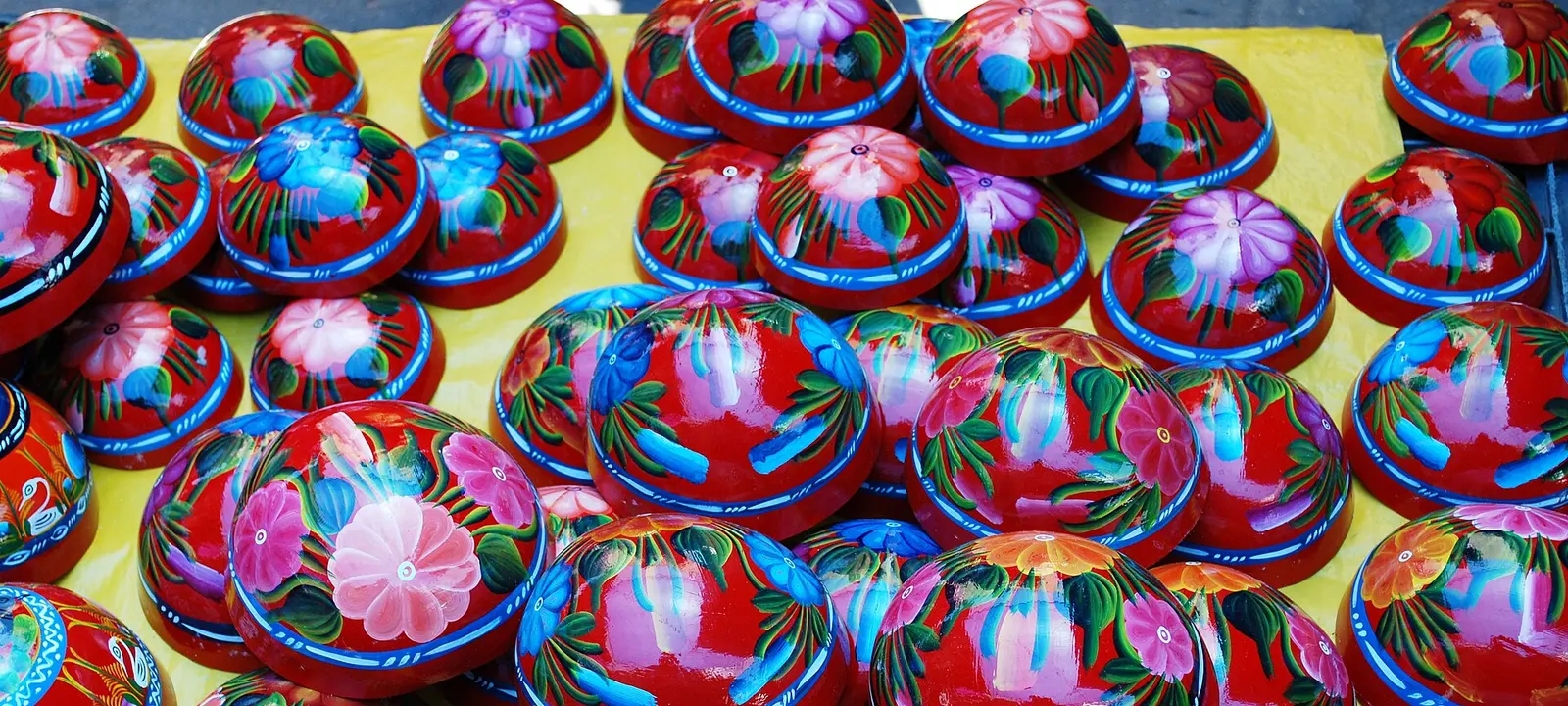
Mexico’s craft regions combine deep cultural lineage with established export infrastructure, which makes them reliable sources for wholesale buyers — provided you buy from recognized producers, verify authenticity, and plan around fragile goods and modest minimum order quantities. The four categories most imported — Talavera pottery, Oaxacan barro negro, alebrijes, and Taxco silver — each have distinct regional hubs, materials, and verification cues that affect price, lead time, and risk.
Why origin matters in Mexican handicrafts
Sourcing from the region of origin (Puebla for Talavera, Oaxaca for barro negro and alebrijes, Taxco for silver) is not just a romantic preference. It usually means better access to skilled artisans, more consistent materials, and stronger protection under Mexican geographic-indication rules. For importers, this also simplifies due diligence: producers in origin towns typically have relationships with local cooperatives, can show craft lineage, and are easier for agents to audit on a sourcing trip.
For the highest-value categories, the Mexican government regulates the use of certain names. The term “Talavera” is protected — only certified workshops in the Puebla–Tlaxcala region may use it on certified pieces. Silver from Taxdo typically carries a registered workshop hallmark. Buyers should always ask for the certification documents rather than relying on visual inspection alone.
Talavera pottery (Puebla)
Talavera is a tin-glazed earthenware produced mainly in Puebla and Cholula. The piece is hand-thrown or molded, fired, hand-painted with mineral pigments, then glazed and re-fired. Certified Talavera carries a workshop signature, the artist’s initials, the location, and a “DO” (Denominación de Origen) stamp.
- Typical MOQ: 50–200 pieces per design for custom orders; mixed pallets are common for first orders.
- Lead time: 8–16 weeks depending on firing schedules and decoration complexity.
- Price drivers: hand-painting density, piece size, number of firings.
- Logistics note: Highly fragile and moderately heavy; expect 15–25% breakage buffer on ocean shipments and budget for foam-fitting and double-walled cartons.
Always confirm the producer is on the current certified Talavera producer list maintained by the Mexican regulator before placing a first order.
Barro negro (Oaxaca)
Barro negro is a burnished black clay pottery from the San Bartolo Coyotepec area of Oaxaca. The signature deep-black sheen comes from a single firing followed by manual burnishing with a quartz stone before the clay cools. Modern pieces are decorative and fragile; they are sold primarily as accent decor.
- Typical MOQ: 30–100 pieces; many workshops are small family operations.
- Lead time: 4–8 weeks for standard shapes, longer for custom.
- Price drivers: size, wall thickness (thinner walls mean higher skill and breakage risk), uniformity of the black sheen.
- Buying tip: Always inspect for hairline cracks before shipping — the burnishing process can mask small fissures that later propagate in transit.
Alebrijes (Oaxaca)
Alebrijes are brightly painted woodcarved figures. The two main styles come from very different regions and should not be conflated: the Oaxacan wood alebrijes (carved from copal or similar hardwoods by Zapotec artisans in San Martín Tilcajete, Arrazola, and surrounding villages) and the cartonería alebrijes (paper-mâché, often from Mexico City and Puebla). Buyers should specify which they want — they have very different price points, sizes, and shipping profiles.
- Typical MOQ: 20–50 pieces for fine wood alebrijes; cartons are cheaper and lighter.
- Lead time: 2–6 weeks for wood, depending on the carving queue.
- Price drivers: carving detail, paint density, number of colors, size. Real Oaxacan wood alebrijes are signed on the base.
- Verification: Look for the artisan’s signature on the underside, the use of natural local woods, and traditional Zapotec iconography.
Taxco silver
Taxco, in Guerrero, is one of the world’s most important silver-producing towns, with a centuries-old tradition. Sterling silver is the standard for export-quality jewelry and homeware. Taxco pieces are typically 925 sterling and should carry a workshop hallmark stamped into the metal.
- Typical MOQ: Highly variable — from small jewelry orders of 20–50 pieces to larger hollowware runs of 100+ units.
- Lead time: 4–12 weeks depending on whether the order is from existing tooling or new designs.
- Price drivers: silver spot price (significant — model pricing with a quoted fixing date), labor hours, stone setting, weight.
- Verification: Insist on hallmarks (the workshop logo or silversmith’s mark, plus 925). Independent assay is wise for first large orders. Note that 950 silver is also common in Taxco and is a legitimate regional standard — confirm with the workshop which alloy you are buying.
Silver is the highest-value craft per kilogram, so insurance and tracked logistics are worth the cost.
Logistics, payment, and quality checklist
A practical ordering workflow for any of the four categories:
- Sample first. Order 2–5 samples of the exact SKU you intend to buy, paid for at retail, and shipped by air.
- Audit the workshop. Either visit in person or send a local agent. Photograph the production area, the kiln or studio, and the artisan at work.
- Lock the spec in writing. Dimensions, materials, finish, hallmarks, packaging, and labeling — all in a proforma invoice signed by the producer.
- Agree on payment terms. Common in Mexican craft exports: 50% deposit on order confirmation, 50% on pre-shipment inspection. Avoid 100% upfront.
- Pre-shipment inspection. A third-party inspector in Mexico City, Puebla, or Oaxaca can verify quantity, quality, and hallmarks before goods leave the workshop.
- Plan for breakage and duties. Build a 5–10% overage for non-fragile silver, 15–25% for ceramics, and verify HS codes and duty rates with your customs broker before quoting landed cost to your customer.
For example, a 300-piece mixed order of certified Talavera from Puebla — 150 dinner plates and 150 serving bowls — typically requires 10–14 weeks from deposit to FOB, a buffer of about 20 pieces per SKU for breakage, and a per-piece landed cost that is roughly 2.5–3.5x the FOB unit price once ocean freight, duties, and last-mile delivery are included.
Always confirm current import requirements, HS classifications, and any export licenses (for example, permits that may apply to antique-style pieces) with Mexico’s SAT (Servicio de Administración Tributaria) and your own country’s customs authority before placing volume orders.
Bottom line
Mexico’s four flagship craft categories reward buyers who source from the right town, verify certifications, and build realistic timelines — most production runs take 4–16 weeks and require a meaningful breakage buffer for ceramics. Start with samples, audit the workshop, lock specifications in writing, and use pre-shipment inspection; these four steps resolve most of the risks importers face. Treat origin authenticity (Talavera DO, Taxco hallmarks, signed alebrijes) as a non-negotiable part of your supplier scorecard, and your landed cost will be predictable from the first order.
FAQ
How can I verify that the Talavera pottery I source is authentic and avoid counterfeit products?+
Authentic Talavera from Puebla carries a Denomination of Origin (Denominación de Origen) issued by the Mexican government and is only produced in authorized workshops in Puebla, Atlixco, Cholula, and Tecali. Each piece should bear the potter's signature, the workshop logo, and the regulatory council's certification stamp; always request the official certificate of authenticity with your shipment.
What are typical minimum order quantities and production lead times for Mexican handicrafts?+
MOQs and lead times vary significantly by craft and workshop—Talavera potters often accept orders starting at 2-5 dozen pieces, while alebrijes carvers and Taxco silversmiths may require 20-50 pieces per design with 4-12 week lead times depending on complexity. Artisan cooperatives in Oaxaca and Chiapas are generally more flexible on quantities than established Puebla or Taxco workshops.
What documentation and shipping considerations should I prepare when importing Mexican handicrafts?+
Standard imports require a commercial invoice, packing list, and bill of lading, with any wooden packaging complying with ISPM-15 fumigation standards. For Taxco silver, request a certificate of metal content (typically 925 sterling), and be aware that CITES permits may be required for alebrijes or crafts containing protected hardwoods, certain plant fibers, or animal materials.
Ready to source?
Give GreenFlip your buying brief, budget and deadline. We turn it into an evidence-backed sourcing decision and an executable order.
Start a sourcing brief →