Sourcing Guide: Handicrafts from the Philippines
A sourcing guide to the Philippines: capiz shell craft, abaca and raffia fibre, rattan furniture, Paete wood carving, and pearls
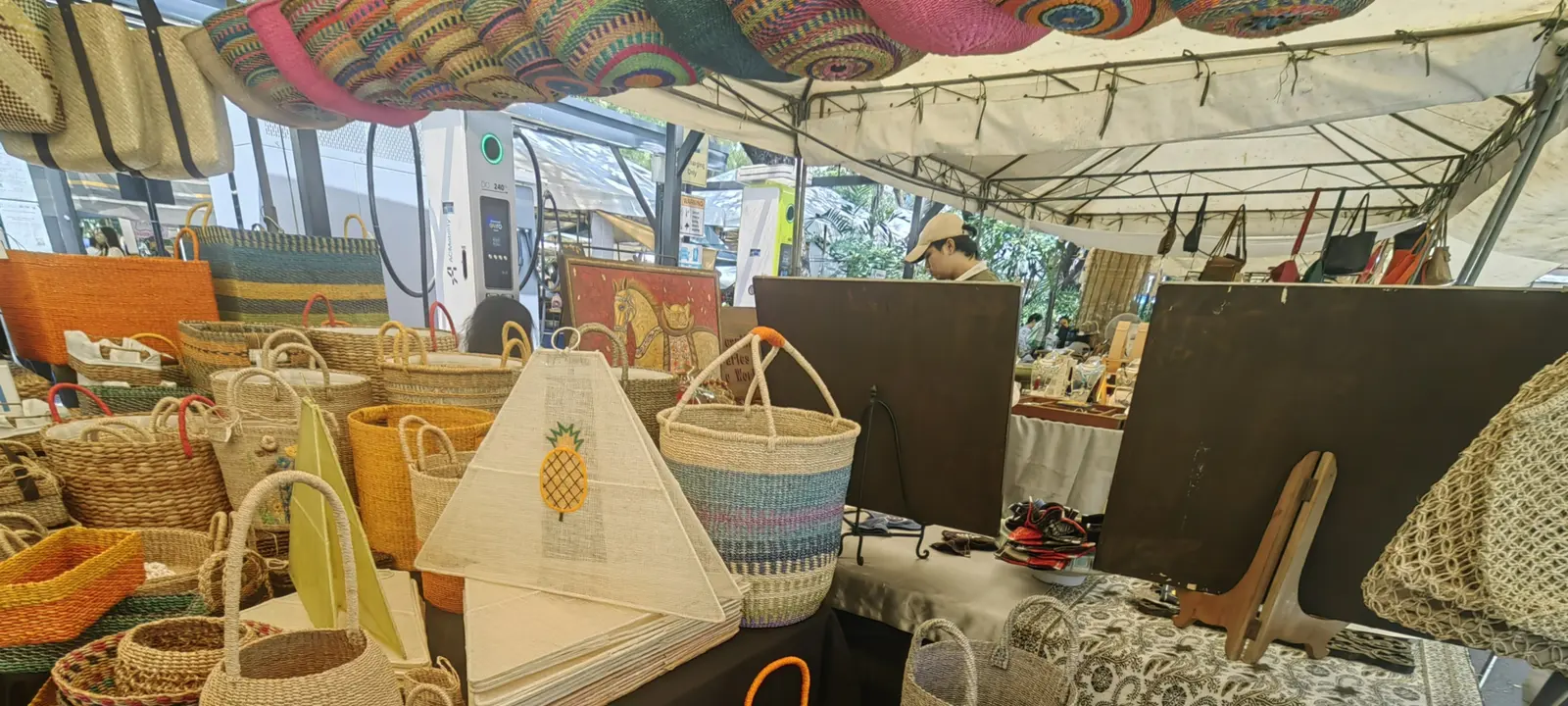
The Philippines is a strong single-origin source for five distinct handicraft categories — capiz shell, abaca and raffia fibres, rattan furniture, Paete wood carving, and South Sea pearls — each with its own production cluster, material reality, and compliance profile. Smart buyers treat the country as a portfolio of specialty hubs rather than one generic “Philippine handicraft” market, and they plan shipments around Manila’s port calendar and the two major trade fairs rather than spot-buying.
The Philippines at a glance for handicraft buyers
Most production for export clusters in three regions: Metro Manila and the surrounding Central Luzon provinces (Bulacan, Pampanga, Laguna) for capiz, wood carving, and finished fibre goods; the Visayas, especially Cebu, for rattan and woven furniture; and Palawan plus the Sulu Sea for cultured pearls. Abaca fibre is grown in the Bicol region, Eastern Visayas, and parts of Mindanao. Shipping consolidates through the Port of Manila and Cebu for most FCL/LCL volume, with Cebu often faster for rattan from the Visayas. Lead times from PO to ETD typically run 45–75 days for hand-finished goods, longer for custom rattan or carved items.
Capiz shell craft
Capiz is the flattened shell of the windowpane oyster, named after Capiz Province on Panay Island but now sourced across coastal Visayas and Mindanao. Workshops cut, sand, polish, and inlay the translucent shell into lampshades, lanterns, window panels, placemats, and decorative boxes. Bulk applications favour lanterns and lampshades (consistent die-cut shapes) and window panels (custom motifs).
For importers, watch three things. First, consistency: capiz varies in translucency, mother-of-pearl sheen, and natural veining — set a clear “A/B/C” grading reference sample before production. Second, substrate quality: cheaper products use thin plywood and staples that can rust; specify marine-grade ply, stainless staples, and food-safe backing where relevant. Third, finish: hand-laid pieces beat machine-cut for optics, but expect higher defect rates. Typical MOQs start around 200–500 units per design for handwork, lower for machine-cut. A 40HQ holds roughly 4,000–6,000 standard lampshades depending on packing.
Abaca and raffia fibre
Abaca (Manila hemp) is a bast fibre from a banana relative, indigenous to the Philippines, and the country remains the dominant global producer. It is exported as raw fibre, twisted twine and rope, handwoven cloth (often called “sinamay” in the hat trade), and finished products such as placemats, storage baskets, bags, and decorative panels. Raffia — softer, ribbon-like — is used in flat-weave hats, bags, and trims; some of it is locally grown, some imported and re-processed.
Specify fibre grade (abaca grades are conventionally organised by cleanliness, colour, and tensile strength) and request a fibre origin letter for traceability. For woven goods, ask for consistent ply, twist, and a clear tolerance on panel dimensions. Lead times are moderate — most handweaving workshops can deliver 1,000–3,000 placemats in 4–6 weeks once approved — but custom dye-lots and matching ribbons add time.
Rattan furniture
Cebu is the historic centre of Philippine rattan furniture, with secondary production in Davao and parts of Luzon. Products span dining chairs, lounge seating, beds, and decorative screens, plus a large market in woven storage. Material comes in three broad bands: peeled rattan core (smooth, modern), wicker-style peel on pole (heavier, classic), and synthetic rattan (HDPE) wrapped onto aluminium — verify which you are actually buying.
Rattan’s risk profile is reputational as much as functional. Sustainability is the headline concern: a clear chain-of-custody statement, plantation origin, or third-party forestry certification is now a procurement requirement for many EU and North American retailers. Specify construction details — mortise-and-tenon joinery, kiln-dried frames, marine glue at load points, and PE/rubber foot caps — because furniture returns are costly.
Paete wood carving
Paete, a small town in Laguna Province, has been a wood-carving community for generations. Workshops produce religious figures, functional items (cutting boards, utensils, boxes), and decorative panels. The main species are narra (Philippine mahogany), molave, ipil, and the harder kamagong, with acacia and mango increasingly used for kitchenware.
Plan long lead times — a single carver may produce only a few dozen detailed pieces per month, so a coordinated group of workshops is the realistic route for any meaningful order. Final sanding and finishing should happen after delivery to the consolidator to avoid transit damage. Expect 60–120 days for non-stock carved items.
Pearls
The Philippines is one of three principal sources of golden South Sea pearls, produced mainly from farms around Palawan, with white South Sea and some akoya/mabe production as well. Value is driven by lustre, surface cleanliness, shape, size, and colour, with golden hues commanding the highest premiums. Pearl auctions and direct mill sales are the standard buying channels; hand-set jewellery is a separate, design-driven segment.
Sourcing mechanics: a short checklist
- Trade fairs: FAME+ (Manila FAME) and Design Week are the two anchor events; pre-book 1:1 meetings at least 6–8 weeks ahead.
- Documentation per shipment: commercial invoice, packing list, certificate of origin (Form E for EU/GSP-eligible goods, where applicable), and species/permits where CITES or DENR requirements apply.
- QC: arrange a pre-shipment inspection in Manila or Cebu; for carved and woven goods, build 5–10% overage into the PO to cover AQL defects.
- Payment: 30% TT deposit, 70% against copy of B/L is common; an LC at sight is normal for first orders above roughly USD 30,000.
Regulatory and compliance
Three Philippine agencies matter most: the Department of Environment and Natural Resources (DENR) for wildlife and forestry permits, the Philippine Fiber Industry Development Authority (PhilFIDA) for abaca, and the Bureau of Fisheries and Aquatic Resources (BFAR) for shells and pearl-related products. On the importing side, your country’s customs authority and, where relevant, CITES national management offices control entry. Rules change frequently and species-listings are nuanced — confirm current requirements directly with DENR and your destination’s competent authority before locking the purchase order.
Bottom line
The Philippines rewards buyers who treat each product line as its own supply chain: capiz and abaca are scalable with the right QC, rattan needs a sustainability story, Paete carving needs patience, and pearls need a grading system you trust. Build around Manila FAME, the Cebu and Manila port network, and 30/70 TT terms for your first orders, and verify every export and import requirement with DENR and your local customs authority before you ship.
FAQ
What are the primary production regions for these handicrafts, and how does location affect shipping logistics?+
Capiz shells are processed in Capiz province, abaca and raffia in the Bicol and Visayas regions, rattan and Paete wood carvings in Luzon, and cultured South Sea pearls in Palawan. Sourcing near major gateways like Manila or Cebu generally reduces inland transit costs and shortens export timelines.
How can I confirm the authenticity of Philippine South Sea pearls and ensure they meet my import standards?+
Request gemological reports from recognized laboratories verifying origin, size, and quality grading, and ask suppliers to provide export documentation issued through the Philippine Department of Trade and Industry. Established farms in Palawan maintain traceability records for their cultured pearls, which is useful for both quality assurance and customs clearance.
Do Paete wood carvers and rattan furniture makers accept custom designs, and what details should I include in a production brief?+
Most workshops welcome custom commissions, particularly for established buyers placing regular orders. Supply scaled drawings, finished dimensions, preferred wood or rattan grade, surface finish requirements, and target quantities so the producer can quote accurately and schedule carving, assembly, and finishing.
Ready to source?
Give GreenFlip your buying brief, budget and deadline. We turn it into an evidence-backed sourcing decision and an executable order.
Start a sourcing brief →