Sourcing Guide: Handicrafts from Nepal
A sourcing guide to Nepal's crafts: pashmina and cashmere, felted wool, singing bowls, thangka painting, and lokta paper
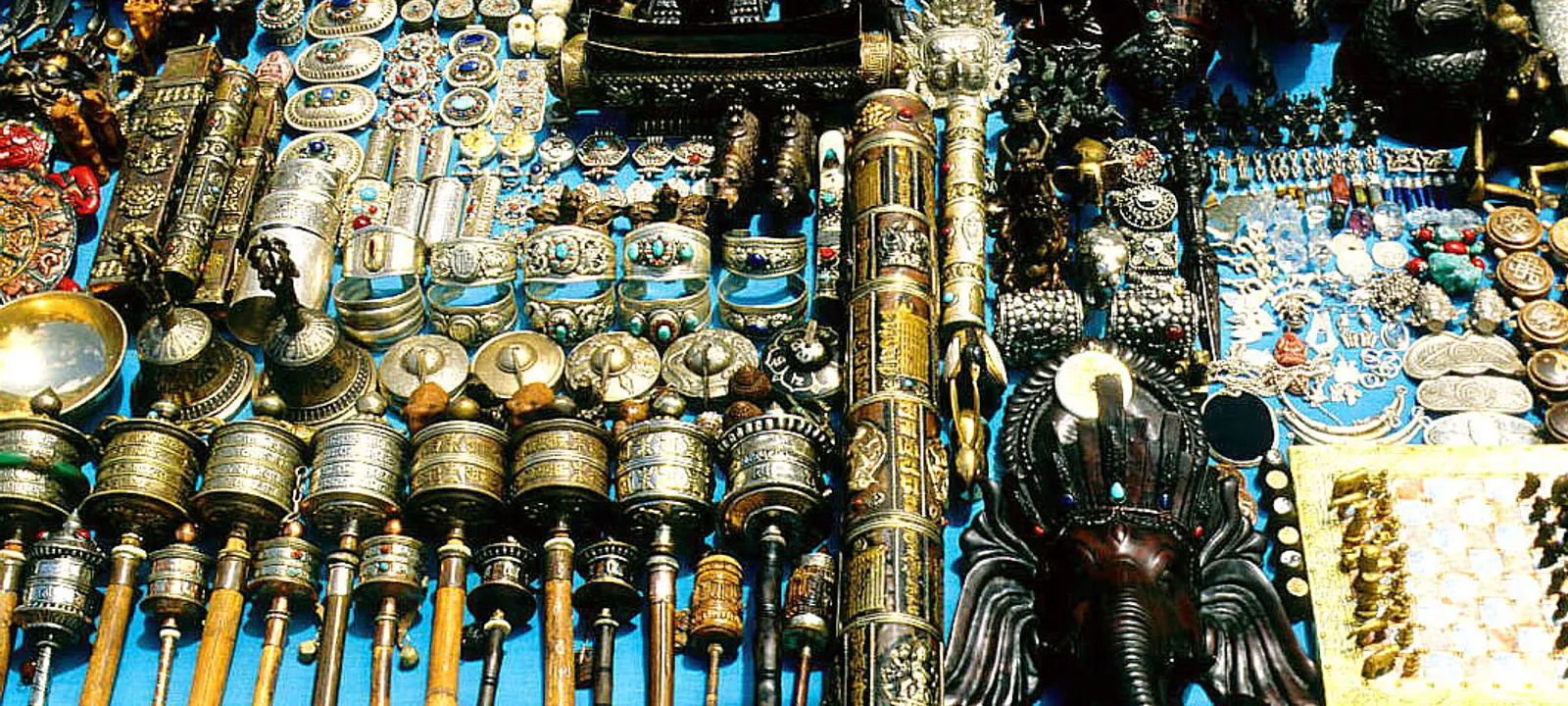
Nepal’s handicraft sector offers five distinct categories with strong artisan identity: pashmina and cashmere, felted wool, singing bowls, thangka painting, and lokta paper. Sourcing here rewards buyers who plan for small-to-medium production runs, longer lead times, and a hands-on approach to quality control. Each craft differs sharply in materials, skills, and risk profile, so each needs its own vetting process and supplier strategy.
Working with Nepali suppliers: the basics
Most export-ready handicraft producers cluster in the Kathmandu Valley, with strong sub-clusters in Patan and Bhaktapur for metalwork and felt, and high-altitude Himalayan regions for raw pashmina fiber. Expect a mix of small family workshops and a smaller number of mid-sized export houses that coordinate multiple artisans under one roof.
Trade terms are typically negotiable: a 30–50% deposit with the balance paid against pre-shipment inspection or on copy of B/L is common. Minimum order quantities vary widely — thangka and singing bowls often have no effective MOQ, while felted wool and lokta paper usually require a few hundred units per design. Lead times run 4–8 weeks for ready designs and 8–14 weeks for custom work, factoring in raw material seasonality (pashmina combing season and lokta harvesting both follow weather cycles).
Verification of an exporter’s legitimacy is straightforward: ask for their exporter registration with Nepal’s Department of Industry, and confirm any claim of “Nepali pashmina” origin with the relevant Nepali trade body or GI (Geographical Indication) registry, as the framework is still maturing.
Pashmina and cashmere
Nepal is a recognized origin for genuine pashmina — the fine under-fiber of the changthangi goat raised at high altitude. Distinguish pashmina from generic cashmere: Nepali pashmina typically measures in the low-teens micron range and is hand-spun, while broader cashmere can come from many goat sources and may be machine-spun.
For bulk orders, clarify with the supplier:
- Fiber origin (Nepal vs imported Chinese or Mongolian cashmere)
- Spinning method — hand-spun commands a premium; machine-spun is faster and cheaper
- Weave: plain, twill, or jamawar (a figured weave)
- Dye process (AZO-free compliance is routinely required by EU buyers)
- Dimensions, weight, and finishing (fringe style, hemming)
Sampling: order 3–5 samples per color/finish before bulk, and commission an independent test for pilling, colorfastness, and fiber diameter.
Felted wool
Nepali felt is almost entirely hand-felted using Newari techniques, typically from New Zealand or Tibetan-sourced raw wool that is dyed, layered, and rolled-felted with hot water and soap. It is used for slippers, bags, hats, coasters, and small homeware.
Key buyer checks:
- Confirm wool origin and whether the fiber is 100% wool or blended with acrylic (a common cost cut)
- Density and uniformity of felting — press and flex a sample; poor felt delaminates at the edges
- Stitching and component quality (zippers, leather trim, lining)
- Color consistency from dye lot to dye lot
Felted wool is one of the more accessible categories for first-time Nepal buyers: low tooling cost for new designs, and skilled felters can match custom Pantone references within 2–3 weeks.
Singing bowls
Singing bowls sold globally are predominantly made in the Kathmandu Valley, produced by hammering heated metal alloys into shape and then hand-tuned. Traditional bowls use a multi-metal alloy; modern budget bowls are often cast from a single alloy and lack harmonic depth.
Practical buying points:
- Hand-hammered vs cast — only hand-hammered bowls produce the sustained, layered tone buyers expect
- Test on a sample: a good bowl rings cleanly for 8+ seconds when struck and produces a clear fundamental tone when a wooden mallet circles the rim
- Exterior finish should show even, visible hammer marks; a mirror-smooth surface often indicates a cast bowl
- Metal composition: if you sell into markets with heavy-metal restrictions (e.g., EU REACH, California’s Prop 65), request mill certificates — do not assume traditional alloys are compliant
Thangka paintings
Thangka is a centuries-old Tibetan Buddhist painting tradition, done on cotton or silk canvas with mineral and organic pigments, often taking weeks per piece. Production is concentrated among a small number of trained master artists in Kathmandu and Boudha.
For wholesale:
- Distinguish original thangka (a unique artwork) from thangka-style production (multiple copies of one design by a workshop) — your market and price point will dictate which to source
- Request the artist’s name and lineage where possible; this is a meaningful selling point
- Canvas preparation and pigment authenticity matter — traditional mineral pigments are more lightfast than many modern substitutes
- Confirm crating standards, as thangkas are easily damaged in transit by moisture and folding
Lokta paper
Lokta paper is made from the inner bark of the Daphne papyracea shrub, which grows at 2,000–4,000 meters and regenerates after cutting, making it a genuinely renewable craft material. Production is concentrated in the hill districts, and harvesting is managed through community forestry programs.
Buyer considerations:
- Sheet sizes range from small stationery formats to large lamp shades; confirm GSM (typically in the 80–200 range) and the inclusion of flower or leaf inclusions
- “Acid-free” and “archival” claims are common marketing points — verify with a pH test if your market requires archival-grade paper
- Custom printing, die-cutting, and embossing are routinely offered as a finishing service in Kathmandu
- Plan for humidity protection during transit; lokta is moisture-sensitive on long ocean voyages
Quality control and shipping
Plan at least one pre-shipment inspection for any first order, and retain samples from the production run for reference. Local QC firms in Kathmandu can usually mobilize within 48–72 hours.
For shipping, Kathmandu connects by air to most major hubs; sea freight out of Kolkata or Mundra is viable for non-urgent, lower-value goods, with a longer transit plus an inland leg.
Documentation: confirm a Certificate of Origin, commercial invoice, packing list, and — for plant-based or animal-fiber goods — a phyto-sanitary certificate where required by your destination. For singing bowls, check whether your destination requires specific metal-content declarations. Always verify current import requirements with the customs authority of your destination country, as rules change frequently.
Bottom line
Nepal’s five flagship crafts each occupy a different niche, but they share a common sourcing logic: small skilled workshops, strong artisan identity, and the need for hands-on buyer engagement. Start with felted wool or lokta paper for lower-risk entry, then add pashmina, singing bowls, and thangka as you build supplier relationships. Plan for longer lead times, verify origin claims independently, and budget for a pre-shipment inspection on every new supplier.
FAQ
How can I verify the authenticity of pashmina products from Nepal?+
Genuine Nepali pashmina is handwoven from the fine undercoat of Changthangi (Chyangra) goats raised at high altitudes in the Himalayas. Look for the government-issued "Nepali Pashmina" geographical indication (GI) tag and request fiber content documentation from your supplier. Be wary of items labeled "pashmina" that are actually blends of viscose, acrylic, or merino wool, as these are common in the market.
Are there export restrictions on singing bowls and other Nepali handicrafts?+
Antique singing bowls, thangka paintings, and religious artifacts may be subject to Nepal's Department of Archaeology export restrictions, particularly if classified as cultural heritage items or over a certain age. New handmade products generally export freely but typically require a commercial invoice, certificate of origin, and sometimes a Department of Industry export permit. Always confirm current regulations and age documentation with your supplier before shipping.
Is lokta paper truly sustainable, and how is it produced?+
Lokta paper is made from the inner bark of the Daphne papyracea shrub, which grows wild at high altitudes in the Nepali Himalayas. The plant is cut above the root and regenerates, allowing the same shrubs to be harvested periodically without deforestation. Production is largely done by hand using traditional methods, and the paper is naturally insect- and mildew-resistant, making it a genuinely eco-friendly product.
Ready to source?
Give GreenFlip your buying brief, budget and deadline. We turn it into an evidence-backed sourcing decision and an executable order.
Start a sourcing brief →