Sourcing Guide: Handicrafts from Morocco
Morocco's craft clusters for bulk buyers: zellige and Fassi ware in Fes, Berber rugs in the Atlas, tannery leather, and Marrakech brass and lanterns.
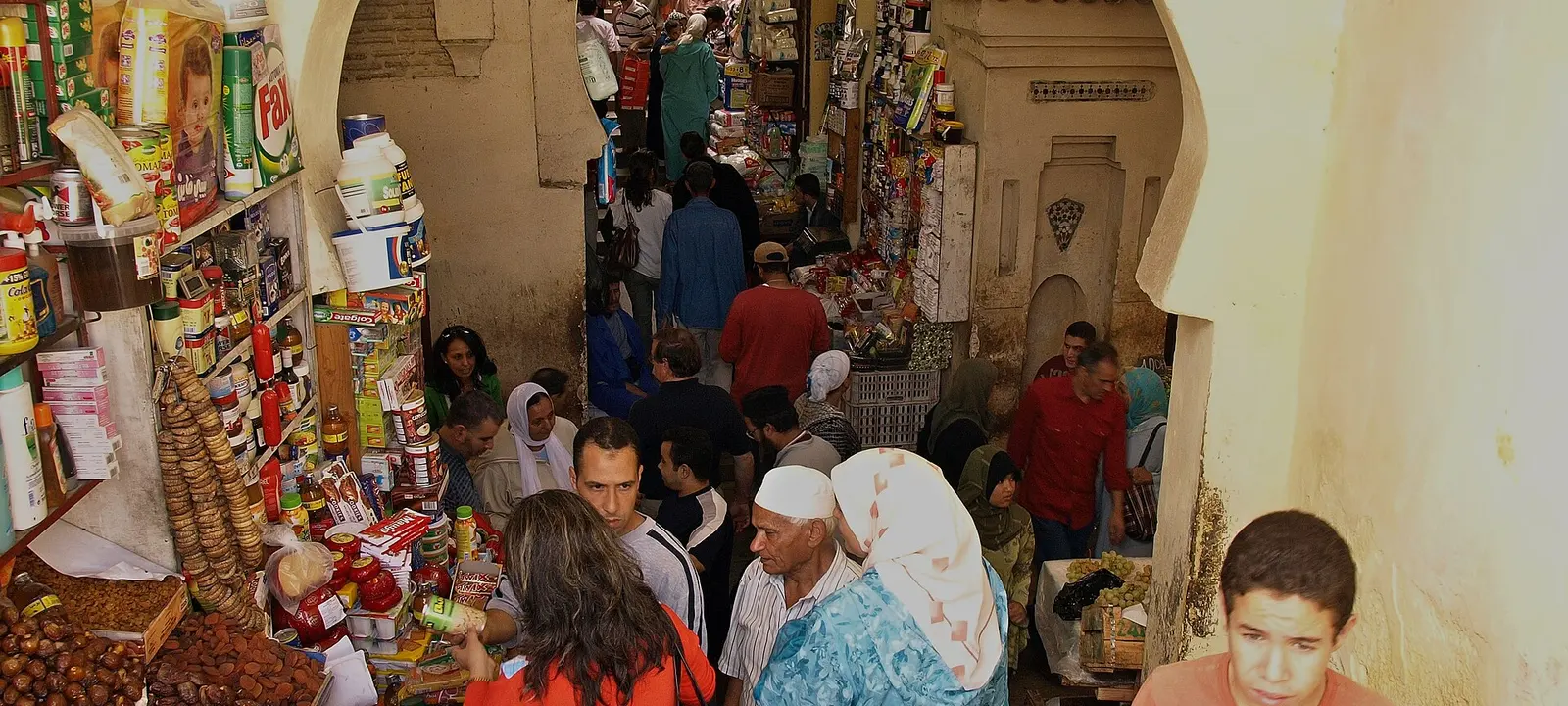
Morocco sits at the crossroads of Africa and Europe, and its handicraft sector—rooted in centuries of Berber, Arab, Andalusian, and Saharan traditions—has long supplied the global wholesale market. For bulk buyers, the country’s main craft clusters (Fes for zellige and leather, the Atlas Mountains for rugs, and Marrakech for metalwork) offer consistent supply, skilled artisan networks, and reasonably mature export infrastructure. Success depends less on finding the products and more on vetting suppliers, planning logistics for fragile or heavy items, and understanding the import rules in your destination market.
Why Morocco, and what to know going in
Morocco’s handicraft economy is organized around a cooperative and small-workshop model rather than large factories. The Ministry of Tourism, Handicrafts, Air Transport, and Social Economy, along with the state-backed Maisons de l’Artisan, regulate the sector and register cooperatives. For a serious buyer, that means relationships matter: most reliable sources come via trade fair introductions, vetted wholesalers in the medinas of Fes and Marrakech, or pre-qualified export agents in Casablanca.
Plan for negotiation on price and for delays caused by hand production cycles. Plan also for category-specific constraints: zellige is fragile, leather needs careful rehydration after shipping, and rugs occupy significant cubic volume.
Zellige tile (Fes)
Zellige is the geometric mosaic tilework cut by hand from glazed terracotta. Fes is the historic center, and most authentic production still happens there in small workshops around the Ain Nokbi district.
What to specify in any order:
- Tile size (commonly 10×10 cm or 5×5 cm)
- Color (dozens of traditional glazes; natural terracotta is the cheapest)
- Finish (glossy, semi-matte, or Bejmat unglazed)
- Mounting preference: loose tiles, pre-assembled panels on mesh, or pre-mounted sheets
- Trim and edge pieces
Lead times run 8–14 weeks for stock glazes and longer for custom colors. MOQs vary by workshop but expect 15–30 m² minimum. Zellige breaks easily in transit, so specify reinforced crating with corner protection and corner-to-corner foam. Sea freight is standard; air freight is rarely cost-effective for tile.
Berber rugs (Atlas Mountains)
Hand-knotted rugs from the Middle, High, and Anti-Atlas ranges are made by Amazigh (Berber) cooperatives, primarily of wool. The Beni Ourain style (cream with dark geometric patterns) is the most commercially demanded and the most faked.
Vetting the supply:
- Ask for the knot count per square decimeter (real hand-knot work is typically in the tens of thousands per square meter; very low counts suggest a machine-knot or blended rug)
- Request the workshop origin, the weaver, and the dye sources (natural vs. synthetic)
- Order a pre-production sample signed and dated
- Confirm whether the rug is single-knot (knotted by one weaver) or cooperative (multiple weavers, common in larger sizes)
For a 2×3 m wool Beni Ourain, expect 4–8 weeks for a stock design and 10–16 weeks for custom. Container loading averages 250–400 rugs per 40’ HC depending on size.
Leather goods (Fes tanneries)
Fes is famous for its vegetable-tanned leather, processed in the open-air tanneries using traditional methods. The leather goes into babouches (slippers), bags, poufs, jackets, and small accessories.
Bulk considerations:
- Vegetable-tanned leather needs 4–6 weeks minimum between tanning and finishing; plan purchase orders well ahead of season
- Many “tanneries” marketed to buyers are retail sites; ask whether the supplier is an actual workshop
- Confirm tannage type (vegetable vs. chrome) and finish
- Babouche production is highly fragmented: a single workshop may specialize in one style
MOQs for finished leather goods are negotiable; for raw hides, expect full-pallet quantities. Note that finished leather goods often have different HS code treatment than raw hides, and duties can differ accordingly.
Brass and metal lanterns (Marrakech)
Marrakech’s metalworkers in the souks around the Place des Ferblantiers produce pierced brass, copper, and silver-plated lanterns. They range from tabletop (20–30 cm) to floor-standing (1–1.5 m) and are extremely fragile in shipping.
Practical notes for bulk:
- Most workshops use similar techniques; differentiation is in design, pierced patterns, and finish
- Ask whether the lantern is fully hand-pierced, partially pierced (with cast or stamped elements), or largely machine-made
- Specify the metal thickness (thinner = more fragile in transit)
- Insist on individual wrapping and nested packaging with rigid dividers; this typically adds 8–12% to packaging cost but reduces breakage claims sharply
Lead times are short for stock designs (2–4 weeks); custom pierced patterns take 6–10 weeks.
Bulk sourcing tips that apply across categories
- Visit in person, at least once. The medina sourcing model rewards relationship, and pre-shipment photos are not a substitute for seeing dyes, knotting, and glaze quality in person.
- Use the local Maison de l’Artisan or Chambre d’Artisanat to verify cooperative registration.
- Pre-shipment inspection (PSI) is essential for rugs, tile, and lanterns. A third-party inspector in Casablanca can usually be on-site within 48 hours.
- Currency: prices are quoted in MAD, USD, or EUR. Fix the currency in the contract and reference the relevant central rate at invoice time.
- Payment: a 30–50% deposit on order confirmation is standard, balance against B/L copy. Letters of credit are accepted for larger orders.
- Shipping: Casablanca is the main port. Most handicrafts are best shipped FCL (40’ HC for rugs and tile; 20’ for lanterns) because LCL handling is where breakage concentrates.
- Import rules: duty treatment depends on your destination. The EU and Morocco have an Association Agreement providing preferential tariffs for goods meeting the rules of origin; the US has a bilateral FTA. Tariff lines, thresholds, and origin rules change over time, so always check the current schedule and origin rules with the official authority for your market (for the EU, the European Commission’s TARIC database; for the US, US Customs and Border Protection and the ITC HTSUS, with FTA origin rules published by USTR). Verify all current thresholds and origin requirements with the relevant customs authority before placing orders.
A short pre-order checklist
- Supplier identity, cooperative or workshop, and registration document
- Signed and dated pre-production sample
- Written specifications: materials, dimensions, finish, color code
- Lead time and shipping terms (Incoterm)
- Currency, payment schedule, and LC terms if applicable
- Pre-shipment inspection by a third party
- Packaging spec and breakage-allowance clause
- Export license and certificate of origin for FTA or preference claims
- Confirmed booking with the freight forwarder
- Importer-of-record documentation for the destination market
Bottom line
Morocco can be a strong, reliable source for zellige, Berber rugs, leather goods, and metalwork—if you treat sourcing as a relationship-driven, specification-heavy process rather than a price-driven one. The most common failure modes are under-specifying quality at the sample stage, under-crating fragile items, and assuming duty treatment that no longer applies. Invest in a sourcing trip, lock down a third-party inspection partner, and confirm current tariff and origin rules with your destination market’s official customs authority before you cut your first purchase order.
FAQ
How can I verify the authenticity of hand-chiseled zellige tiles versus machine-made imitations?+
Authentic zellige is made by hand-chiseling glazed terracotta into precise geometric shapes called 'furmah' and assembling them mosaic-style without grout lines. Request samples and look for slight irregularities in glaze color, edge finish, and tile thickness, which are hallmarks of the Fes artisans. Genuine producers can also walk you through the workshop and introduce you to the master craftsmen.
What should I know about sourcing leather from the Fes tanneries?+
Fes leather is traditionally tanned in open-air pits using natural materials such as pigeon droppings, cow urine, and plant-based tannins, which produces the characteristic suppleness and earthy color palette. Buyers should expect strong odors at the tanneries, plan longer lead times than industrial operations, and work directly with cooperatives to ensure ethical labor practices and traceable supply.
What is the most efficient way to consolidate orders from multiple craft regions in Morocco?+
Most importers consolidate shipments through Casablanca or Tangier-Med ports, which offer stronger logistics infrastructure than routing directly from regional craft hubs. Plan a sourcing route that includes Fes, Marrakech, and the Atlas Mountains, then arrange for suppliers to deliver goods to a single consolidation warehouse before export. Partnering with a freight forwarder experienced in Moroccan customs is essential to avoid paperwork delays.
Ready to source?
Give GreenFlip your buying brief, budget and deadline. We turn it into an evidence-backed sourcing decision and an executable order.
Start a sourcing brief →