Sourcing Guide: Handicrafts from Thailand & Vietnam
Thailand and Vietnam for bulk buyers: Chiang Mai celadon, Binh Duong lacquerware, bronze casting and Mekong silk, with the export realities of each.
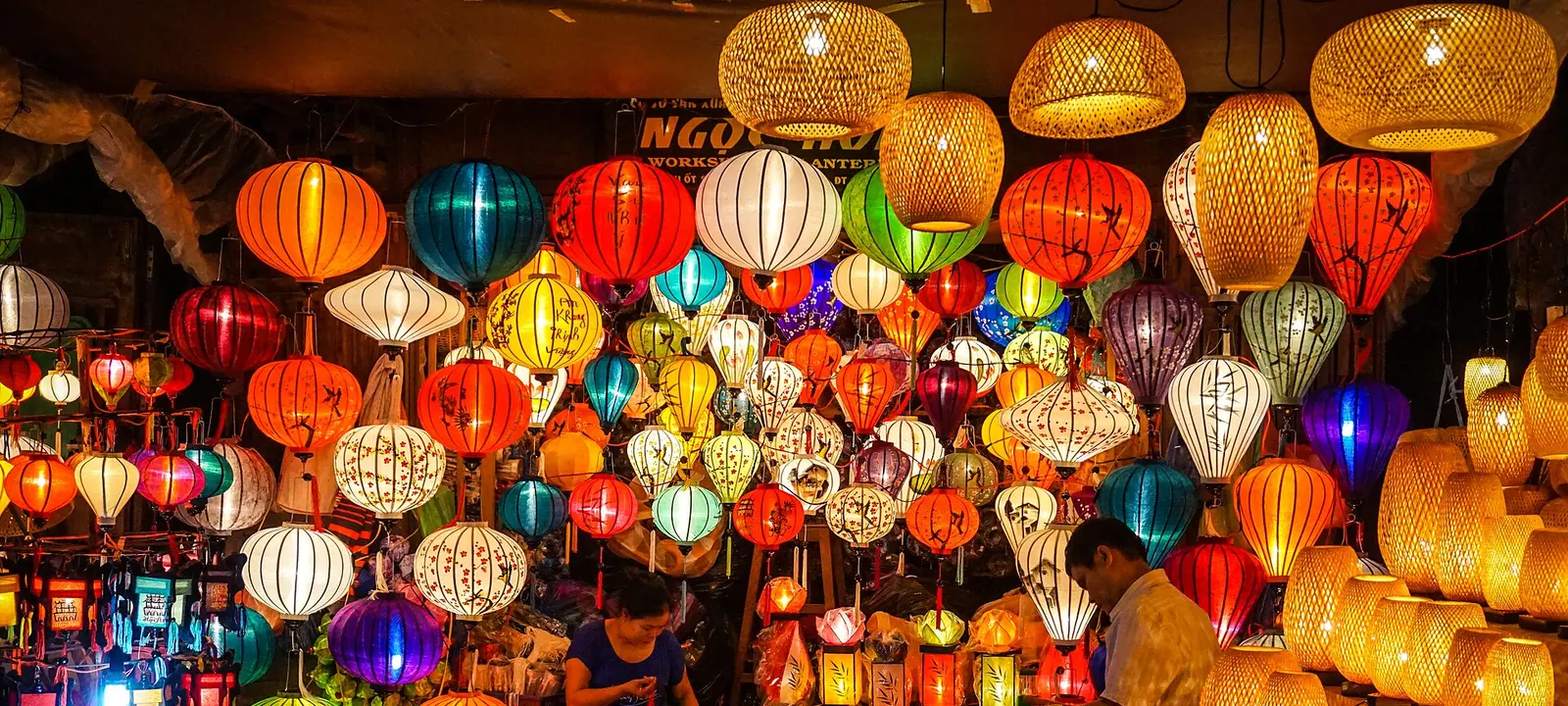
Thailand and Vietnam are two of Southeast Asia’s strongest handicraft origins, each with deeply rooted artisan traditions and well-developed export infrastructure. For bulk buyers, the four categories covered here - celadon, Binh Duong lacquerware, bronze casting, and Mekong silk - offer distinct sourcing profiles, from short lead times on stocked ceramics to multi-month curing cycles for traditional lacquer. The key to profitable sourcing is matching the right sub-region and technique tier to your target retail price point.
Why Thailand and Vietnam for handicrafts
Both countries combine deep artisan traditions with mature export logistics. Bangkok, Ho Chi Minh City, and Hai Phong all have established freight forwarders and consolidation services accustomed to mixed container loads. The two origins also complement each other: Thailand typically leads on certain ceramics and silk, Vietnam on lacquer and bronze, though both produce all four.
For a first-time buyer, the realistic entry path is to start with a single category from a single province, validate the supply chain, then expand. Trying to onboard four categories and ten workshops in a single buying trip is the most common mistake new importers make.
Celadon from Thailand
Thailand’s celadon tradition centers on Sa Kaeo Province, where kilns near the Cambodian border have produced the greenish-grey glazed stoneware historically known as Sangkhalok for centuries. Chiang Mai and Lampang also produce celadon alongside other ceramics, often with more contemporary designs and patterns.
What bulk buyers actually need to know:
- Glaze consistency: Good celadon has a soft, even celadon-green glaze without crawling, pinholes, or crazing. Inspect under raking light.
- Body and firing: Higher-fired stoneware chips white-grey inside; lower-fired earthenware chips brownish-red and is less durable for tableware.
- Forms: From dinnerware sets to decorative garden stools, lanterns, and bathroom accessories. Garden stools (often called “Chinese garden seats” in Western retail) are a high-volume SKU.
- Lead time: Stocked pieces ship in 2–4 weeks; custom molds and glazes take 60–90 days plus sampling.
Avoid “vintage-look” suppliers that chemically distress new pieces and pass them off as antiques. This can create import and consumer-fraud risk depending on your destination market, and the pieces tend to fail in use within a season.
Lacquerware from Binh Duong
Binh Duong Province, just north of Ho Chi Minh City, is Vietnam’s lacquer heartland. Villages such as Tuong Binh Hiep have produced lacquerware for generations. The traditional process uses resin from the cây sơn tree and involves 20+ layers of lacquer, with sanding and curing between coats.
Key buying considerations:
- Cure time matters: A genuinely hand-lacquered piece takes 4–8 weeks of curing alone. Suppliers offering “two-week turnaround” are cutting corners, usually with synthetic sealers.
- Technique tiers: Plain lacquer (sơn mài) at entry level, eggshell inlay (sơn mài vỏ trứng) mid-tier, and mother-of-pearl inlay (khảm trai) at the top.
- Common SKUs: Trays, jewelry boxes, photo frames, decorative panels, and tableware.
- MOQ reality: Many workshops accept 30–50 piece orders for stock designs; bespoke work usually starts at 100+ pieces.
The trade-off is genuine: real lacquer is heavy, durable, and ages well, but it cannot be sold at fast-fashion price points. Position it accordingly in your catalog.
Bronze casting
Both countries have active bronze traditions, but they diverge in style and scale.
Thailand is known for lost-wax cast Buddha statues and decorative bowls, particularly around Chiang Mai and Bangkok. The finish is typically polished or patinated rather than brightly lacquered.
Vietnam has a strong heritage tied to the ancient Dong Son bronze drums. Today, Ngoc Xuyen village near Hanoi and some southern workshops produce decorative bronzes, bells, and architectural hardware at competitive prices.
Buying points:
- Method: Sand-cast pieces are cheaper but coarser; lost-wax (cire perdue) is the premium technique and the standard for figurative work.
- Alloy: Ask the supplier. Decorative bronze is often a copper-tin or copper-zinc alloy, not pure bronze. Confirm the alloy content if your market cares (for example, for sculpture resale or insurance).
- Patina vs. lacquer: Authentic patina develops over years. Many pieces are artificially patinated or clear-coated. Be clear with your supplier about which you want.
- Religious items: Buddha imagery, especially in larger sizes, requires careful handling around local sensitivities. Some Western buyers commission non-figurative designs (bowls, bells, hardware) to avoid issues.
Mekong silk
Silk from the Mekong region is best understood as two distinct supply chains:
- Vietnam’s Mekong Delta: Tan Chau, Lai Thieu (Binh Duong again), and My Tho are centers. Tan Chau is famous for “shimmer” silk (lụa Tân Châu) with subtle iridescence from the weave structure, and for mud-dyed silk using iron-rich delta mud.
- Thailand’s Isan region: Khorat silk from Nakhon Ratchasima and surrounding provinces. Heavy, lustrous, often with hand-tied ikat patterns (mud mii).
Practical differences:
- Hand-loom vs. machine-loom: Hand-loom fabric has subtle irregularities and is typically 2–4x the price. Educate your retail buyers on how to spot the difference.
- Widths and weights: Thai silk is often sold at narrower widths; Vietnamese silk varies. Specify meters per kilogram or GSM when comparing supplier quotes.
- End uses: Garment fabric, scarves, home textiles, and accessories. Finished scarves and shawls from both origins are a high-volume, lower-MOQ entry point.
Logistics, quality control, and compliance
A practical pre-shipment checklist for mixed handicraft containers:
- Third-party pre-shipment inspection (PSI) by a firm based in Bangkok or Ho Chi Minh City
- Country-of-origin certificates matched to each product line
- Photographs of master carton and inner packing, plus a unit-level QC report
- Carton weight and dimensions for accurate freight quoting
- Sample retention: keep 2–3 samples of each SKU for 12 months minimum
- Confirmation of any religious or cultural motifs for your retail market
On regulatory: import duties, consumer product safety standards (lead and heavy-metal limits in glazes, lacquer, and metal alloys), and labeling requirements vary by destination. The U.S. Consumer Product Safety Commission (CPSC) and the European Commission (DG GROW) are the relevant authorities for the two largest destination markets. Always verify current rules with the customs and consumer-safety authority in your destination country before finalizing an order.
Worked example: A 20-foot container from Vietnam might hold roughly 600–800 medium lacquer trays, or a mix of around 200 trays, 150 bronze bowls, and 100 silk throws. FOB Ho Chi Minh City for a mixed handcraft load typically makes small-quantity air freight uneconomical below about 1.5–2 CBM, so plan to consolidate at a warehouse in HCMC or Bangkok if your order is below that threshold.
Bottom line
Thailand and Vietnam offer four handicraft categories with genuine heritage and export-ready infrastructure, but the buying experience is very different by product. Celadon and Mekong silk are the easiest entry points for first-time buyers; Binh Duong lacquer and bronze casting reward longer supplier relationships and careful spec sheets. Start with a single category, insist on third-party pre-shipment inspection, and verify all destination-market compliance with the relevant official authority before you ship.
FAQ
What should I expect regarding minimum order quantities and production lead times for these handicraft categories?+
As handmade goods, MOQs are generally more flexible than factory-produced items, though custom designs or matching sets still require higher minimums than stock pieces. Lead times typically range from several weeks for ready-made celadon or silk to several months for custom bronze castings or multi-layered lacquerware. Always confirm capacity and queue times well before peak retail seasons, as artisan workshops often book up months in advance.
How do I verify authenticity and ensure consistent quality across shipments of celadon, lacquerware, and bronze items?+
For Thai celadon, look for the traditional jade-green glaze and natural crackle patterns; authentic Binh Duong lacquerware should show many thin resin layers with a smooth, durable finish rather than a painted-on look. Insist on pre-shipment inspections covering food-safety compliance for any functional tableware, dimensional tolerances, and finish consistency. Engaging a local third-party QC firm familiar with these craft traditions is strongly recommended for repeat orders.
What payment terms and due diligence steps are recommended when first sourcing from Thai and Vietnamese handicraft suppliers?+
Standard terms are usually a T/T deposit with balance paid against a copy of the B/L, though an L/C is advisable for initial high-value orders to protect both parties. Before committing, verify the supplier's export license, request a live video tour of the workshop, and check references through the Thai Department of International Trade Promotion or Vietnam's relevant trade authorities. For Mekong silk, sourcing through established cooperatives rather than individual weavers typically reduces the risk of inconsistent dye lots or supply interruptions.
Ready to source?
Give GreenFlip your buying brief, budget and deadline. We turn it into an evidence-backed sourcing decision and an executable order.
Start a sourcing brief →