Vendor Onboarding & Compliance for Procurement Teams
Onboarding an artisan or export-house vendor: documents to collect, social compliance checks, banking and payment set-up, code of conduct and trial order.
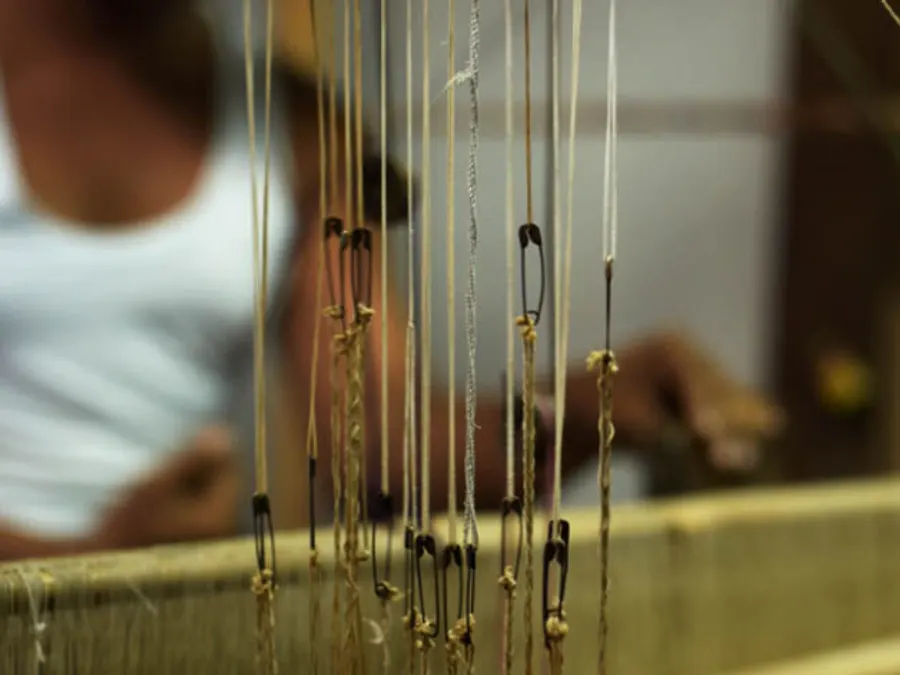
Procurement teams that onboard handicraft vendors systematically — covering documentation, social compliance, banking, and a small trial order — cut their exposure to shipment delays, quality failures, and ethical-sourcing claims that won’t survive an audit. The process below is the working order most mid-size importers use: qualify the workshop, collect the documents, verify the audits, agree on conduct, and only then scale the relationship through a paid trial.
Pre-qualification & First Conversations
Before asking for any paperwork, hold a 30–45 minute discovery call to confirm the supplier is actually an exporter, not a domestic trading middleman. Confirm product category, materials, indicative capacity per month, and which export markets they currently serve. Ask how many artisans work on the floor and whether production is in-house or subcontracted — subcontracting is common in handicrafts and is the single biggest risk factor for both quality drift and undeclared labor. Suppliers who can answer these questions clearly and show you recent buyer references are usually safe to move to documentation.
Documents to Collect
Treat the document list as a tiered checklist rather than a one-time ask. Most buyers split it into three passes.
Corporate & legal basics
- Business license / certificate of incorporation
- Tax registration certificate
- Export license or IEC code (where applicable)
- PAN/GST or local equivalent (depending on country)
- Authorized signatory list
Capability & quality
- Product catalog with materials breakdown
- List of in-house processes (carving, weaving, finishing, packing)
- Photo or video walkthrough of the workshop
- Sample of recent shipment invoices (anonymized if needed)
- Quality manual or SOPs, if any
People & compliance
- Owner/partner identification for KYC
- Factory layout with worker headcount by section
- Wage and attendance policy
- Any existing social audit reports (see next section)
- Insurance certificates (product liability, fire, worker accident)
Keep originals scanned to a shared folder the buying, finance, and compliance teams can all access. Re-check expiry dates every 12 months — licenses and audit reports are the items most often left to lapse.
Compliance & Social Audit Checks
For handicrafts, social audits are usually framed around two widely accepted schemes: amfori BSCI and SEDEX SMETA. Both examine labor conditions, health and safety, and management systems, but they are run by different platforms and have different reporting formats. In practice, a buyer’s compliance team decides which scheme they accept — many retail buyers in the EU and UK accept either, while US buyers often have their own proprietary checklist.
The key checks before signing a new vendor are:
- A valid audit report dated within the last 12 months
- The audit type (full vs. follow-up vs. desktop)
- Number and severity of non-conformities
- A documented corrective action plan for any “Critical” or “Major” findings
- Site address on the audit matching the production site (not a third-party office)
If the workshop is small (under ~30 workers) and has never been audited, most schemes now allow a self-assessment questionnaire (SAQ) as a first step, with a full audit triggered once order volume justifies the cost. Confirm the exact entry-point rules with the scheme owner — amfori publishes its BSCI entry criteria and SEDEX publishes SMETA scoping guidance on their official sites, and these are updated periodically.
For product-safety compliance, keep separate files for REACH (EU chemicals), CPSIA (US children’s products), and any FSC or other chain-of-custody claims if wood or paper is involved. Always request test reports tied to specific shipment lots, not blanket certificates.
Banking & Payment Set-Up
Finance teams typically run a parallel KYC process on the supplier’s bank. Standard requirements are a recent bank reference letter, a voided cheque or bank statement, and a signed remittance template that matches the legal entity name exactly. Mismatches here are the most common reason first payments get frozen by a bank’s screening filter.
Common structures for handicraft orders:
- T/T (wire): 30% deposit on PO confirmation, 70% against copy of B/L — standard for FOB shipments
- LC at sight: used when order value is high or the buyer is unfamiliar with the vendor
- Open account with credit insurance: only after 2–3 clean shipments
- Trade assurance / escrow: useful for very first trial, but adds 1–3% in fees
Always pay the deposit to the company name on the invoice and proforma, not to a personal account or an unrelated third party. If the supplier requests a change in beneficiary mid-deal, treat it as a red flag and re-verify.
Code of Conduct Agreement
A short, signed code of conduct is more useful than a 30-page corporate CSR policy. Cover the essentials: no child labor, no forced labor, no discrimination, freedom of association (or legal equivalent in the producing country), lawful wages, safe working conditions, and a ban on subcontracting without written approval. The code should reference the audit standard you are using (BSCI or SMETA) so there is no ambiguity during a follow-up audit. Both parties sign, and the code is referenced in every purchase order.
The First-Order Trial
Treat the first order as paid sampling at scale, not as production. Most buyers cap it at 10–20% of the supplier’s normal monthly capacity, or one full production batch — whichever is lower. Specifications should be locked in a tech pack: dimensions, materials, finishes, packaging, labeling, and a defects allowance (commonly 2–3% AQL for handicrafts, where natural variation is normal).
Useful trial gates:
- Pre-production sample signed off by the buying team
- Mid-production photos or a virtual walkthrough
- Third-party pre-shipment inspection (PSI) at 80–100% production
- 10% payment retention released 30–60 days after goods arrive, to surface any latent defects
Worked Example: Onboarding a 40-Person Carpentry Workshop
A US-based home goods importer wants to add a wooden decor supplier in India. They run a discovery call, confirm in-house carpentry and finishing, and request documents. The workshop shares business license, PAN, a SAQ under BSCI, a recent photo walkthrough, and three buyer references. The importer verifies the bank details match the legal entity, opens the supplier on their ERP, and signs a 2-page code of conduct referencing BSCI. The first order is one 40ft container of mixed SKUs at the workshop’s stated monthly capacity, paid 30/70 T/T, with a 3% AQL, a mid-production photo check, and a PSI at 90% completion. If the shipment clears inspection and the 30-day retention window passes clean, the second order moves to standard terms and a full BSCI audit is scheduled within 12 months.
Bottom line
A disciplined onboarding flow — qualify, document, audit, sign the code, trial-ship, then scale — protects both the buyer’s brand and the supplier’s growth. Build the process once as a checklist with named owners, keep audit and license dates on a calendar, and never let a relationship skip the trial order no matter how good the references look on paper. Where regulations or scheme rules apply, always confirm the latest version directly with the issuing body (amfori, SEDEX, or your local customs authority), as entry criteria and thresholds are revised periodically.
FAQ
What core documents and credentials should we collect from a new artisan or export-house vendor before issuing a first purchase order?+
Request a business registration or license, tax ID, export license, a bank reference or recent statement, product liability insurance, a signed code of conduct, and any current social-audit reports (e.g., BSCI, SEDEX). For artisan groups, also gather cooperative or association records and a list of any sub-producers, so you can confirm legal standing, financial stability, and the real compliance baseline before committing funds.
How should we treat compliance if a smaller artisan supplier has no BSCI or SEDEX audit on file?+
Accept an equivalent recent third-party social audit (e.g., SCOPE, Wrap, or Fair Trade), commission a buyer's own pre-audit against the same criteria, or start with a self-assessment questionnaire combined with an on-site visit. Capture any gaps in a time-bound corrective action plan and make repeat orders contingent on closure, so you maintain standards without automatically disqualifying smaller makers.
How should we structure the first-order trial to keep our risk in check?+
Run a small pilot with conservative payment terms, such as a partial deposit with the balance paid against a copy of the B/L or via L/C at sight, and avoid 100% advance. Require a written pre-production sample approval, a pre-shipment inspection, and a clear defect or rework clause that lets you cancel or recover costs if goods or compliance fall short.
Ready to source?
Give GreenFlip your buying brief, budget and deadline. We turn it into an evidence-backed sourcing decision and an executable order.
Start a sourcing brief →