Sourcing Peruvian Alpaca Textiles in Bulk
Buying Peruvian alpaca knitwear and home textiles in bulk: micron grades, what baby alpaca really means, blend labelling, pilling and moth control.
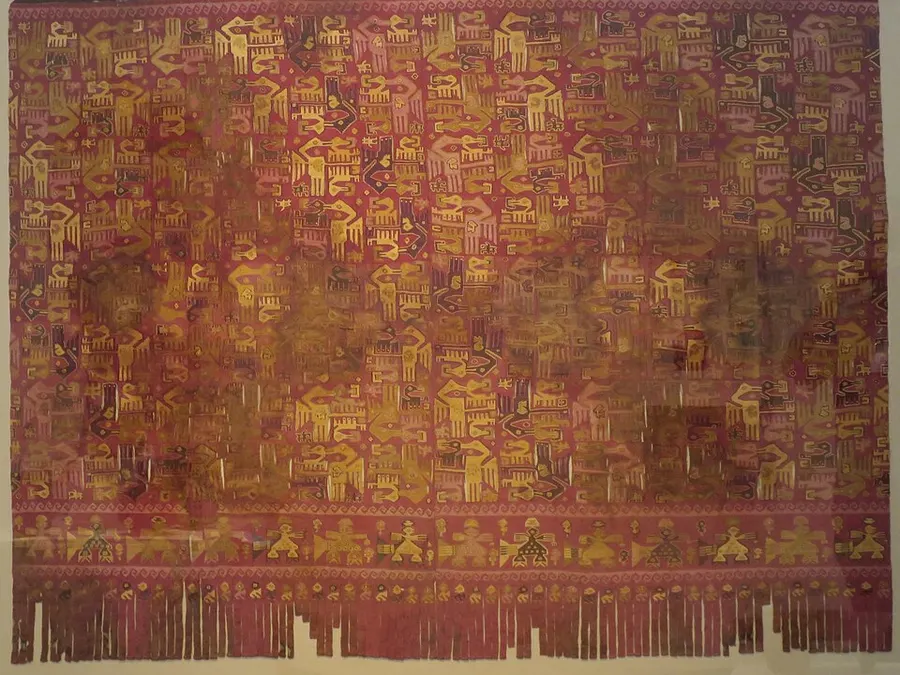
Peru supplies most of the world’s alpaca fibre and has the industrial depth to turn it into finished goods — top-making, spinning, dyeing, machine knitting, and weaving all exist domestically alongside a large hand-knit cooperative sector. That combination makes it an unusually complete sourcing origin: you can buy raw yarn, cooperative hand-knits, and industrial-quality flat-knit programmes from the same country and often the same city.
The category’s risks are concentrated in two places: fibre content honesty, and the gap between how a sample behaves and how a production run behaves.
Fibre and grade
Alpaca comes in two breed types. Huacaya has a crimped, dense fleece and accounts for the large majority of the national herd; Suri has a longer, straighter, lustrous fleece and is scarcer and dearer. Llama fibre is coarser and cheaper and appears in blends. Vicuña sits at the very top of the market and is a CITES-listed species with a tightly controlled, registered supply chain — if it is offered casually, walk away.
Fineness is graded by mean fibre diameter:
| Grade | Approximate mean diameter |
|---|---|
| Royal alpaca | ~19 µm and finer |
| Baby alpaca | ~20–22.5 µm |
| Superfine | ~23–25.5 µm |
| Huarizo | ~26–29 µm |
| Coarse | ~30–32 µm |
Treat the boundaries as trade conventions rather than legal definitions — they vary slightly between processors. As with any fibre, the mean matters less than the distribution: the percentage of fibres above roughly 30 µm is what determines whether a garment prickles at the neck.
Alpaca also comes in a wide range of natural undyed colours, from white through fawns and browns to greys and black. Natural-colour programmes avoid dyeing cost and read well as a sustainability story, but lot-to-lot colour matching on natural shades is harder than on dyed yarn, not easier. Buy the full season’s fibre in one lot if colour continuity matters.
Specifying the product
- Composition, as a percentage, with the alpaca grade named.
- Yarn count and twist. Higher twist resists pilling and feels firmer; lower twist feels softer and pills more. This is the central trade-off in the category.
- Knit gauge and construction, or weave specification and GSM for flat goods.
- Finishing. Washing, softening, and anti-pill finishes change hand feel substantially. Approve the finished sample, not the greige one.
- Dimensions and tolerance after relaxation. Knitted alpaca relaxes; specify measurements after the finishing and conditioning the factory will actually apply.
- Care labelling. Most alpaca is hand-wash cold or dry-clean and dry flat. The US Care Labeling Rule requires care instructions on apparel, and an unsupportable machine-wash claim is a returns problem waiting to happen.
Testing and labelling
- Fibre identification and blend quantification on the production lot, using the microscopy methods standardised for animal fibres. Keep the report with the shipment file.
- Micron testing where you are paying a premium for a grade. Laser-based fibre diameter measurement is routine in Peru and inexpensive.
- Labelling. The US Wool Products Labeling Act covers alpaca as a specialty fibre and requires fibre content, country of origin, and the RN or company identity; EU Regulation (EU) No 1007/2011 sets the reserved fibre names and the rules for declaring blends. “Alpaca blend” without percentages is not compliant in either market.
- Pilling and colourfastness to your retail channel’s standard.
Hand-knit versus machine-knit
Cooperative hand-knit production carries a genuine artisan story, supports rural highland income, and handles complex hand-finished detailing that machines cannot. It also varies more piece to piece, scales by recruiting knitters, and needs a longer runway. Specify tolerance in measurement bands and inspect to a defect list that acknowledges hand variation.
Industrial flat-knit production out of Arequipa and Lima gives you consistency, repeatability, and faster reorders, at the cost of the handmade narrative. Many buyers run both: machine-knit core lines for stock and hand-knit capsules for story.
Whichever you choose, do not describe machine-knit goods as handmade. It is the most common false claim in this category and the easiest to disprove.
Moths, packing, and transit
Alpaca is a protein fibre and therefore a food source for clothes moths and carpet beetles. This is the practical logistics risk in the category, and it is worse for goods that sit in a warehouse between seasons.
- Require a pest-control treatment and, where destination rules demand it, a fumigation certificate.
- Specify individual polybagging, ideally with the bag sealed rather than open-ended.
- Use desiccant in the carton for humid routing, and avoid stuffing containers in the Callao rainy-season humidity without moisture protection.
- On arrival, quarantine and inspect a sample of cartons before the goods go into general stock. One infested carton contaminates a warehouse.
Compression during ocean transit flattens knitwear. Steam and re-block on arrival, or ship folded with tissue in the shoulders for structured pieces.
Commercial timing
The Peruvian knitwear sector runs on the northern-hemisphere autumn-winter calendar. Capacity tightens from roughly the second quarter as buyers push to ship for autumn arrival, and the best mills fill early. Sampling in the first quarter and confirming bulk before capacity closes is worth more than the price you will negotiate by waiting.
Classification and duty
Knitted garments of fine animal hair, woven throws and blankets, and yarn each classify differently, and within apparel headings the fibre composition determines the subheading. Blends shift classification, sometimes across duty rates. Combine that with the rules-of-origin question under the US–Peru trade agreement and it is worth having your broker classify each SKU against the tested composition before you build your landed cost model — not after.
FAQ
Does baby alpaca come from baby animals?+
No. Baby alpaca is a fibre grade defined by mean fibre diameter, not by the age of the animal, and it can be shorn from an adult whose fleece falls in that micron band. The Peruvian trade grades run roughly from royal alpaca at the finest, through baby, superfine, and huarizo, to coarse. Buyers who assume the grade is an age claim sometimes build marketing copy around animal welfare implications that are simply not what the word means — describe it as a fineness grade and you stay accurate.
How do I stop being sold acrylic as alpaca?+
Test, and test the production lot rather than the sample. Animal fibres and synthetics are straightforward for a textile lab to separate, and blend percentages in animal-fibre mixtures are quantified by microscopy under the ISO 17751 series. The commercially dangerous case is not pure acrylic sold as alpaca — that is usually obvious — but a genuine alpaca product where the actual blend ratio is materially different from the declared one, which no amount of handling will reveal. Put the tested composition on the label and audit it periodically.
Why does alpaca knitwear pill, and can it be prevented?+
Alpaca has a smooth scale structure and, in the softer grades, a relatively short staple, so loose fibre ends migrate to the surface and tangle under abrasion. Pilling is reduced by longer staple fibre, higher twist in the yarn, tighter knit construction, and proper finishing, and increased by very soft, low-twist, loosely knitted constructions — which are exactly the ones that feel best in the shop. Run a pilling test on the approved construction, set an acceptance grade, and make sure your retail care copy manages the customer's expectation rather than promising something the fibre cannot do.
What MOQ and lead time should I expect?+
Machine-knitted programmes from Arequipa and Lima are typically quoted at 50–300 pieces per style and colour, with the minimum driven by yarn dyeing lots rather than by knitting time. Hand-knit cooperative production runs lower, often 30–100 pieces, but scales more slowly because capacity is people rather than machines. Plan 6–12 weeks for production after sample approval, and book earlier for autumn-winter deliveries, when the whole Peruvian knitwear sector is running at capacity for northern-hemisphere buyers.
Does alpaca from Peru enter the US duty-free?+
Potentially, under the United States–Peru Trade Promotion Agreement, but preferential treatment depends on the goods meeting the agreement's rules of origin and on you making a valid claim with the required origin certification. Textile and apparel rules of origin are among the more demanding, often turning on where the yarn was formed as well as where the garment was assembled — so a Peruvian-made garment knitted from imported yarn may not qualify. Confirm eligibility with your customs broker per product before pricing duty-free into your margin.
Ready to source?
Give GreenFlip your buying brief, budget and deadline. We turn it into an evidence-backed sourcing decision and an executable order.
Start a sourcing brief →