Sourcing Moroccan Berber Rugs in Bulk
Beni Ourain, Azilal, Boucherouite and Hanbel explained for bulk buyers: wool grades, irregular sizing, vintage grading, fibre labelling and pest treatment.
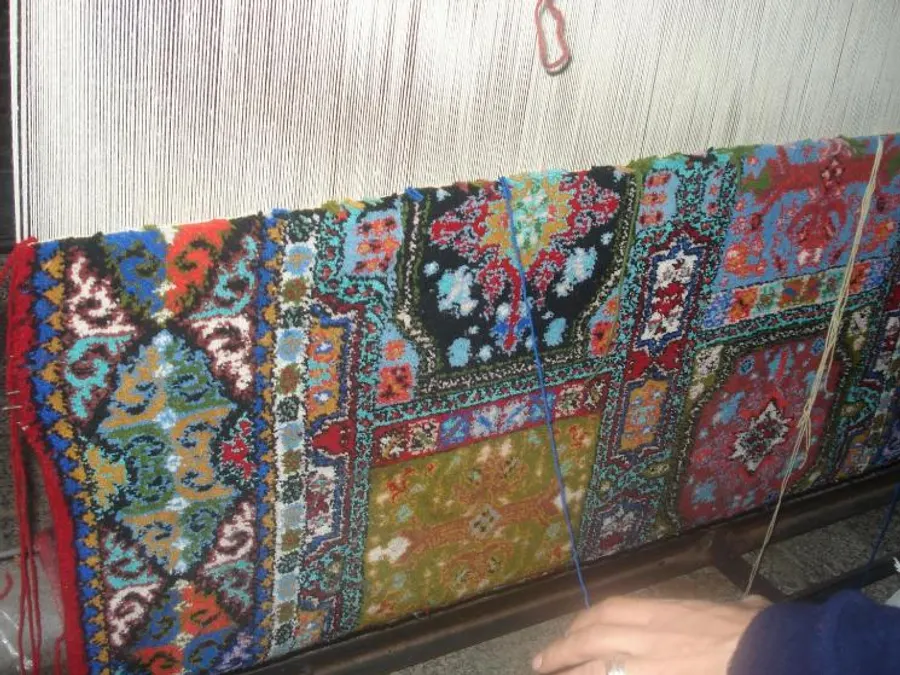
Moroccan rug buying is unusually dependent on knowing what the words mean. The market runs on tribal and regional names — Beni Ourain, Azilal, Boujad, Taznakht, Zanafi, Boucherouite, Hanbel — that describe real, distinct weaving traditions with different materials, densities, and prices. In export catalogues those names get applied loosely, and the gap between a genuine Middle Atlas Beni Ourain and a thick white rug called one can be several times the price.
The main types
Beni Ourain — Middle Atlas. Thick, long pile in undyed sheep wool, ivory or cream ground with a dark brown or black diamond or lattice pattern. The category that built the contemporary market. Heavy, warm, and priced by wool quality and pile depth.
Azilal — High Atlas. Thinner pile, cotton or wool warp, freer abstract designs with colour. Lighter and generally cheaper per square metre than Beni Ourain.
Boujad — plateau region south of the Middle Atlas. Characterised by pink, mauve, and red palettes and looser geometry.
Taznakht — Souss region, finer weave, denser patterning, often with kilim and pile combined in one piece.
Boucherouite — rag rug woven from recycled clothing and textile scraps. Vivid, irregular, inexpensive. Fibre content is mixed and frequently synthetic; this is a labelling issue, not a quality one, provided you describe it accurately.
Hanbel / Zanafi — flatweave, no pile, often with brocaded or sequined detail. Lighter, cheaper to ship, and a different tariff classification from pile rugs.
Handira — the sequinned wedding blanket. Sold as a wall hanging or throw rather than a floor covering.
Wool quality: the thing to get right
Wool grade drives everything about a pile rug’s price and longevity. The critical distinction is live wool against dead wool — the latter recovered from hides at the tannery, weaker and prone to a persistent odour. Beyond that:
- Staple length and crimp determine how the pile recovers from compression.
- Cleanliness of scouring. Under-scoured wool retains grease and dirt that attracts soiling; over-scoured wool loses lanolin and feels dry and brittle.
- Hand-spun versus machine-spun. Hand-spun yarn is uneven, which gives the surface its character; it also varies in strength.
- Undyed versus dyed. The natural creams and browns of Beni Ourain come from the sheep, not the dyepot. Dyed rugs need colourfastness testing; undyed ones need consistency of natural shade across a batch.
Weight per square metre is your fastest single proxy for whether the wool and pile density match the approved sample. Record it at sampling and check it at inspection.
Inspection
- Both diagonals and both widths measured, against an agreed tolerance.
- Lie-flat test on a hard floor. Buckling and curling edges are rejections.
- Pile density — press and part the pile; a thin backing visible through sparse knots means density below sample.
- Backing regularity. Wandering rows and uneven knot lines are normal in village weaving to a degree; define the degree.
- Odour, including after damping a small hidden area.
- Colourfastness to rubbing wet and dry.
- Selvedges and ends intact and properly finished.
- Moth and larval damage, particularly for vintage.
Compliance and logistics
Pest treatment. Wool is keratin. Require fumigation or heat treatment with a certificate, and check destination requirements for used textile floor coverings — several markets treat second-hand goods more strictly than new.
Moisture. Wrap in breathable material, not sealed plastic. Wool shipped damp in a sealed wrap arrives mouldy.
Rolling. Roll on tubes; do not fold pile rugs for container transit.
Labelling. Fibre content, origin, construction. Boucherouite needs particular care.
Classification. Hand-knotted pile rugs and flatweaves fall in different headings — broadly, knotted carpets sit in HS 5701 and woven non-tufted floor coverings including flatweaves in 5702 — and a wall hanging or throw may not be a floor covering at all. Confirm each product with your broker against a sample.
Contract and hospitality channels will ask for a flammability certificate. Establish the requirement before sampling.
Working with the supply chain
Most Moroccan rug production sits with women weaving at home or in village cooperatives in the Atlas, sold on through intermediaries and consolidated by exporters in Marrakech, Casablanca, or Fes. The chain is long, and the weaver’s share is the part that is hardest to see from the buying end.
Practical steps: ask your exporter where the rugs were woven, at what level they buy, and what a weaver receives per square metre. Ask whether you can visit or receive photographs of the source cooperative. Record what you are told. If your retail proposition depends on an artisan story, the story needs to survive a customer asking one follow-up question.
For new production, expect 6–12 weeks after sample approval and MOQs expressed by design and size band, or as a container value. For vintage, expect a graded, photographed piece list and no reorders.
FAQ
What is the difference between Beni Ourain, Azilal, Boucherouite and Hanbel?+
They are distinct weaving traditions, not style names. Beni Ourain rugs come from Middle Atlas tribal groups and are typically thick-piled, in undyed ivory wool with a dark geometric lattice. Azilal rugs come from the High Atlas, are thinner, and carry freer, more colourful abstract motifs. Boucherouite is a rag rug woven from recycled textile scraps rather than wool, which makes it cheap, vivid, and completely different in fibre content. Hanbel is the Moroccan flatweave — no pile, closer to a kilim. Each has its own price logic, and a supplier who uses the names loosely is a supplier to check carefully.
What is dead wool and why does it matter?+
Live wool is shorn from a living sheep. Dead wool, sometimes called pulled or slipe wool, is recovered from hides at the tannery, usually by a chemical or sweating process that damages the fibre. It is cheaper, coarser, weaker, and can retain an odour that survives washing and returns in humidity. It is a recurring quality problem in the lower end of the Moroccan rug trade because the finished rug can look acceptable when new. Ask what wool was used, smell the rug — especially after damping a small area — and weight-test against a known good sample.
Why are the rugs not rectangular?+
Because they are woven on simple vertical looms in village settings, without the tensioning systems a commercial workshop would use. Edges wander, widths vary along the length, and diagonals differ. This is inherent to the category and is part of what buyers are paying for, but it has to be planned for: measure both diagonals and both widths, agree a tolerance in advance, and be explicit with your own customers. A tolerance of a few percent on dimensions is normal; anything that will not lie flat is a rejection.
How should I approach vintage rugs?+
Grade every piece individually — vintage stock cannot be sampled and reordered. Inspect for moth damage, brittle or rotted areas along old folds, thin patches where pile has worn through, repairs and reweaves, and overdyeing used to disguise fading or staining. Require documented washing and pest treatment before shipment, and photograph each piece with an identifier so the rug that arrives is the rug you bought. Expect the supplier to charge for that grading work; the ones who do it properly are worth more than the ones who do not.
What do I need to declare on the label?+
Fibre content, country of origin, and an accurate construction description. This matters most for Boucherouite, which is woven from mixed recycled textiles and is frequently part or wholly synthetic — describing it as a wool rug is a labelling breach in both the US and EU regimes. If the rugs are destined for hotels, offices, or other public interiors, add a flammability test to the requirements list, because contract specifiers will ask for one and untreated wool pile may not meet the applicable standard.
Ready to source?
Give GreenFlip your buying brief, budget and deadline. We turn it into an evidence-backed sourcing decision and an executable order.
Start a sourcing brief →