Sourcing Thai Celadon Glazeware in Bulk
Buying celadon stoneware from Thailand and Vietnam: the crackle glaze, reduction firing, food-contact testing, defect grading, kiln economics and packing.
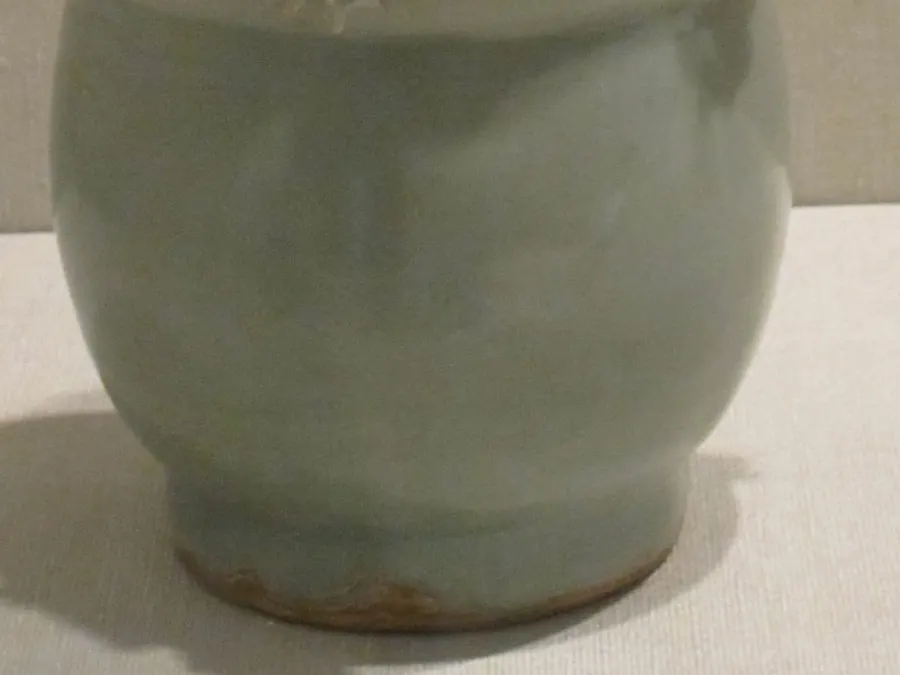
Celadon is a high-fired stoneware with an iron-bearing glaze that develops a jade-green colour in a reduction firing. Thailand is the best-known contemporary source for the export trade, with production concentrated around Chiang Mai and Lampang and a historical lineage running back to the Sawankhalok and Si Satchanalai kilns. Vietnam has its own substantial ceramic export sector, and buyers frequently work across both in a single programme.
For a bulk buyer, celadon is an unusually pleasant category to source — the workshops are export-experienced, the product photographs well, and the price points work for hospitality and retail alike. The failure modes are narrow and specific, which is what this guide covers.
What determines the product
The clay body. Stoneware, fired high enough to vitrify, which is what makes celadon durable enough for tableware in a way that low-fired earthenware is not. Ask for the firing temperature range; genuine celadon is fired well above the earthenware range, and a supplier who cannot tell you the cone or temperature is not running their own kiln.
The glaze. Iron oxide in a base glaze, historically derived from wood ash. The percentage of iron and the reduction schedule determine whether the result is pale sea-green, deep olive, or the celadon-brown that a failed reduction produces.
The firing atmosphere. Reduction. This is the single most demanding part of the process and the reason colour consistency is the category’s main quality conversation.
The crackle. Controlled crazing, often stained to make the network visible. Different workshops run different crackle scales — fine, medium, or dramatic — and it is a specifiable attribute.
Specifying an order
Put these on the purchase order:
- Shape and dimensions with tolerance. Hand-thrown and press-moulded pieces shrink in firing, and shrinkage varies with body moisture. A ±3–5% dimensional tolerance is realistic; if you need pieces to stack or nest, say so explicitly, because stacking is where tolerance failures show up.
- Glaze colour range, approved as a high and low limit sample.
- Crackle scale, approved against a physical sample.
- Food-contact or decorative. This determines your testing regime and your labelling.
- Foot treatment. The foot ring is unglazed or wiped and needs grinding smooth, or it will scratch tabletops. Specify ground and, for premium lines, a wax or felt finish.
- Marking. Country of origin marking is mandatory in most destination markets; for ceramics this is typically applied under the glaze or as a fired-on backstamp so it survives handling. Confirm the method meets your destination’s permanence requirement.
Defect grading
Agree a written defect list before production. A workable starting frame:
Acceptable — inherent to the process
- Colour variation within the approved range
- Crackle in the glaze
- Minor glaze pooling in recesses and at the foot
- Slight throwing rings and dimensional variation within tolerance
- Small iron speckle from the body
Rejectable
- Cracks through the clay body (dull sound on tap; water seepage)
- Glaze crawling — bare patches where the glaze pulled away
- Pinholing or blistering across a visible surface
- Warping that prevents the piece sitting flat or a lid seating
- Sharp or unground foot rings
- Kiln grit or wadding fused to the surface
- Chips on rims and handles
Inspect at AQL sampling levels appropriate to your order size, and inspect at the workshop or a consolidation point rather than at destination — ceramic claims after arrival are hard to attribute between production and transit.
Food-contact testing
If any part of the line is sold for food or drink:
- Heavy metal release. Lead and cadmium leach testing on the finished, glazed article. The US FDA operates action levels for ceramic ware by article type, and the EU regulates ceramic food-contact articles under Directive 84/500/EEC as amended. Test per production lot, not once per design — glaze batches change.
- Crazing. Decide your position. Crazed ware raises hygiene questions for food contact, and several markets’ guidance treats it as a defect on food-contact surfaces even though it is a feature decoratively. A common resolution is to keep the crackle on decorative and drinkware exteriors while using an uncrazed liner glaze on food-contact interiors.
- Thermal shock, dishwasher, and microwave claims. Do not make them unless you have tested them. Stoneware generally tolerates domestic use, but crazed glazes can worsen with thermal cycling, and a “dishwasher safe” claim on packaging is a warranty you will be held to.
Packing
Stoneware is heavy and brittle, and the freight economics push toward maximum density, which is exactly the wrong instinct.
- Individual protection per piece — foam sleeve, corrugated wrap, or moulded pulp.
- Cell dividers within the inner carton; no piece touching another.
- Double-wall export cartons, palletised and stretch-wrapped.
- Drop-test the proposed pack. A workshop that has never run a drop test is guessing.
- Mark cartons with fragile handling and orientation arrows, and check that the arrows survive the freight forwarder’s re-labelling.
Duty and classification
Ceramic tableware and kitchenware fall under HS heading 6912 when the body is not porcelain or china, with porcelain sitting in 6911; ornamental ceramic articles sit elsewhere again. Celadon is stoneware, which normally puts tableware lines in 6912, but the distinction between stoneware and porcelain is a technical one based on the body, and getting it wrong changes your duty rate. Have your broker confirm classification against a physical sample and the workshop’s body specification, not against the product name.
Working with the workshop
Celadon workshops in this region are typically small to mid-sized, family-linked, and export-literate. They will generally accommodate custom shapes and glazes, and mould-making is routine. Two practical points: agree mould ownership and storage in writing, and give the workshop a realistic seasonal forecast. Kiln scheduling is the constraint on their side, and a supplier who knows your Q3 volume in Q1 will fit you into firings far more reliably than one who receives a large order with a six-week deadline.
FAQ
Is the crackle in celadon a defect?+
No — in celadon it is a designed feature. The crackle, properly called crazing, is a network of fine cracks in the glaze layer caused by the glaze and the clay body shrinking at different rates as they cool. Traditional producers control it deliberately and often stain the network with tea or ink so it reads as a pattern. What is a defect is a crack that runs through the clay body itself rather than the glaze, which you can usually detect by the dull rather than ringing sound when the piece is tapped, and by water seepage through the foot.
Can crazed celadon be used for food?+
Handle this carefully and specify it explicitly. A crazed glaze is a porous surface, and food-safety guidance in several markets treats crazing on food-contact ware as a hygiene concern because the crack network can retain residues and resist cleaning. Separately from crazing, any glazed ceramic sold for food contact needs to satisfy heavy-metal release limits — the US FDA operates lead and cadmium leach action levels for ceramic ware and the EU regulates ceramic articles intended for food contact under Directive 84/500/EEC as amended. Decide up front whether a line is decorative or food-contact, label it accordingly, and test the food-contact items on every production lot.
Why does the green colour shift between batches?+
Celadon colour comes from a small percentage of iron oxide in the glaze developing in a reduction atmosphere — the kiln is starved of oxygen at a controlled point in the firing so the iron converts to the form that reads green rather than brown or yellow. Reduction is difficult to hold perfectly uniform across a kiln load, so colour varies by position in the kiln as well as between firings. Approve a colour range with a high and a low limit sample rather than a single target, and expect greater variation than you would accept from an industrial glaze.
What MOQ and lead time is typical?+
Kiln economics drive the minimum. A firing has to be filled to run efficiently, so 100–500 pieces per shape and glaze is a common quote for OEM work, with the higher end applying to custom glazes that require their own firing. Lead times of 6–12 weeks after sample approval are normal, plus 3–4 weeks for sampling itself, and longer if a new mould has to be cut. Building a mould is a one-off cost that most workshops will quote separately — ask who owns the mould afterwards and get the answer in writing.
What breakage allowance should I budget for?+
For well-packed stoneware in double-wall cartons with individual protection, a transit breakage allowance of roughly 2–5% is a reasonable planning figure, higher for large, thin, or handled shapes. Agree in advance how breakage is handled commercially — overage shipped free, credit on the next order, or a claim process — because discovering that you disagree while unpacking a container is a poor time to negotiate.
Ready to source?
Give GreenFlip your buying brief, budget and deadline. We turn it into an evidence-backed sourcing decision and an executable order.
Start a sourcing brief →