Sourcing Egyptian Alabaster Carving in Bulk
Buying Luxor alabaster in bulk: why it is calcite not gypsum, translucency and wall thickness, fissures, lamp certification and the antiquities red line.
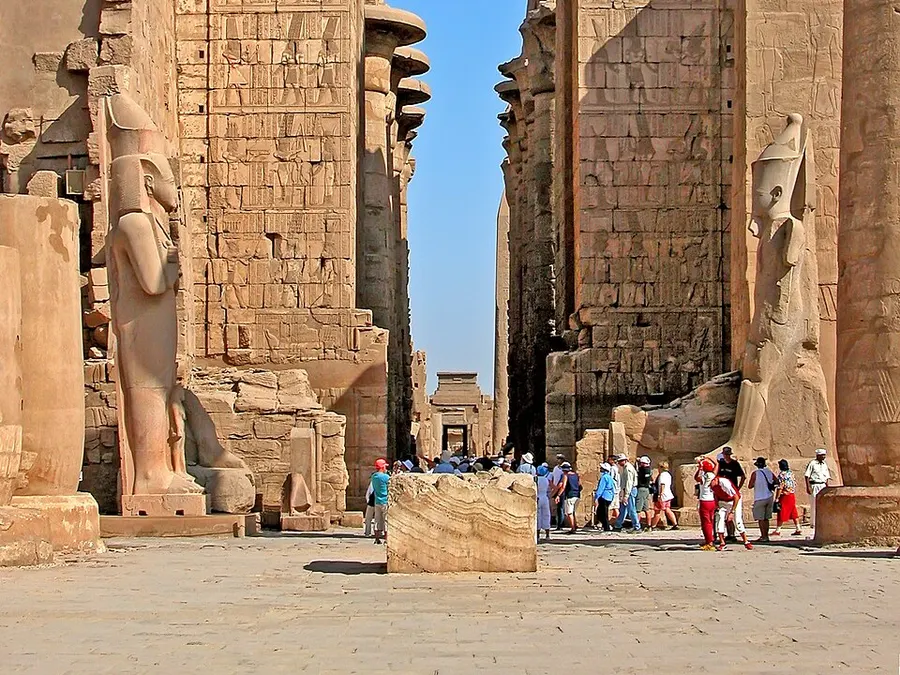
Egyptian alabaster is a banded, translucent calcite quarried in the Nile valley and carved in workshops concentrated around Luxor, particularly on the west bank near the Valley of the Kings. The material has been worked in Egypt for millennia, which gives the category its retail story — and also its principal legal hazard, since the line between a new carving in an ancient style and an actual antiquity is one that customs authorities in several countries police closely.
The material
Calcite alabaster is harder than the gypsum alabaster of the European tradition but still soft as stone goes: it scratches, it chips at edges, and it reacts to acids. Its commercial virtue is translucency. Cut thin, it transmits a warm light that no substitute reproduces convincingly, which is why lighting is the highest-value product in the category.
The stone is naturally banded and veined in creams, honeys, ambers, and greys. That variation is inherent — no two pieces match, and a buyer who specifies uniform colour is specifying something the material cannot deliver. Approve a range with high and low limit samples instead.
Natural fissures are the material’s real risk. Calcite forms in layers and often contains healed or partly healed fractures that are invisible in a polished surface and open up under thermal cycling, impact, or the stress of hollowing. Some can be seen by backlighting the blank, which is another reason to inspect lamp bodies lit.
Product categories
- Lamps and light fittings — table lamps, hanging shades, wall sconces, illuminated bowls. Highest value, highest skill, highest compliance burden.
- Vessels — vases, bowls, canopic-style jars, boxes with fitted lids.
- Figurative carving — pharaonic-revival sculpture, animal forms, busts.
- Tiles, slabs, and inlay — architectural and furniture applications.
Specifying an order
- Stone confirmation — calcite, with the quarry region stated.
- Wall thickness with tolerance, for anything hollowed. This is the single most important spec for lamps.
- Colour and banding range, approved as physical limit samples.
- Finish — polished, honed, or matte. Polished shows scratches; honed hides them and diffuses light differently.
- Base and fitting details for lamps: aperture diameter, cable exit, threaded fitting or friction fit.
- Weight per piece. Alabaster is heavy, and freight will be priced on it. Get weights before you build your landed cost.
- Country of origin marking, applied in a way that survives handling.
Inspection
- Backlight every hollowed piece. Uneven wall thickness shows immediately as bright and dark zones; so do fissures.
- Tap test for through-cracks — a dull rather than ringing note.
- Edge and rim chips, especially on lids and apertures.
- Base flatness. A rocking lamp or vase is a rejection and is common on hand-finished bases.
- Fill and repair. Small voids are sometimes filled with resin and stone dust. Some filling is normal trade practice; undisclosed structural repair is not. Agree what is acceptable in writing.
- Surface finish consistency across a batch, checked under the same lighting.
Compliance
Electrical. If you import a wired lamp, you are importing an electrical product and you own its safety compliance in the destination market. The two viable routes are to buy a fully certified luminaire — which most Luxor workshops are not equipped to supply — or to import unwired stone bodies and fit certified components locally. The second route is what most serious importers do. It also changes the tariff classification, so tell your broker which you are doing.
Food contact. Only if you have specified a sealant and tested the finished article. Otherwise label as decorative.
Antiquities. Egypt prohibits antiquities export, and destination markets enforce cultural-property rules on import. Buy new work from named workshops, keep the invoices, and never accept a piece described as ancient.
Classification. Worked monumental or building stone, articles of stone, and lamps and lighting fittings all sit in different headings, and a stone lamp body without electrical parts classifies differently from a finished luminaire. Confirm per SKU.
Packing and freight
This is a heavy, brittle, expensive-to-replace category, and packing is where most of the money is lost.
- Individual foam or moulded protection per piece; no piece touching another.
- Wooden crates for anything large, with internal bracing. Crates need ISPM-15 compliant treatment and marking.
- Palletise and band; alabaster cartons will not survive being stacked loose in a container.
- Budget a breakage allowance and agree the commercial remedy in advance — overage, credit, or claim.
- Drop-test the proposed pack before the first bulk shipment. A workshop that has always shipped by air courier to individual buyers will not have a container-ready pack design.
Sea freight from Alexandria or Port Said is the norm for volume. Because the stone is dense, chargeable weight rather than volume usually sets the freight cost, so consolidate carefully and check whether a part-container of a lighter craft category rides along economically.
FAQ
Is Egyptian alabaster the same as the alabaster used in European sculpture?+
No, and the difference has practical consequences. European alabaster is generally gypsum — soft, easily scratched, and water-soluble at the surface. Egyptian alabaster is a banded calcite, closer to what the stone trade calls onyx-marble or travertine, harder than gypsum and more translucent. Because they share a name, specifications written for one can be wrong for the other. Ask the supplier to confirm the stone is calcite, and note that calcite is still soft by stone standards and still vulnerable to acids.
Why do alabaster lamps vary so much in price?+
Wall thickness and the quality of the blank. Translucency is the whole point of an alabaster lamp, and it comes from hollowing the piece thin enough for light to pass — which is slow, skilled work with a high breakage rate at the workshop, because a piece can fail after hours of carving. A thick, cheaply hollowed lamp glows unevenly or barely at all. Specify wall thickness with a tolerance, and approve a lit sample rather than an unlit one; alabaster looks identical on a shelf and completely different with a bulb behind it.
Can alabaster bowls and plates be used for food?+
Treat them as decorative unless you have specifically qualified them. Calcite is porous and reacts with acids — lemon juice, vinegar, and wine will etch the surface — and an unsealed porous stone is difficult to clean to a food-safe standard. If a line is intended for food service, you need a food-safe sealant specified and applied, plus the heavy-metal and food-contact testing your destination market requires for the finished article. It is usually simpler and more honest to sell them as decorative and label them so.
What do I need for alabaster lamps entering the US or EU?+
The lamp is an electrical product, not just a stone carving. For the United States that generally means a nationally recognised testing laboratory listing such as UL or ETL for the finished luminaire; for the EU, CE marking against the Low Voltage and EMC directives, plus UKCA for Great Britain. Many buyers avoid the problem by importing the stone bodies as unwired components and fitting certified electrical assemblies in the destination market. Decide which route you are taking before you order, because it changes the product, the classification, and the price.
Is it legal to buy antique-looking alabaster pieces in Egypt?+
New carvings in ancient styles are ordinary merchandise and trade freely. Genuine antiquities are a different matter entirely: Egypt prohibits the export of antiquities, and importing them can expose you to seizure and prosecution in your own market as well. Never buy a piece represented as ancient, excavated, or found, however plausible the paperwork looks, and instruct your buyers in writing not to. Reputable workshops sell new work and say so.
Ready to source?
Give GreenFlip your buying brief, budget and deadline. We turn it into an evidence-backed sourcing decision and an executable order.
Start a sourcing brief →