Pashmina and Cashmere: A Bulk Buyer's Guide
Buying pashmina and cashmere in bulk: micron grades, collective marks, fibre-content testing, blends, labelling law and the shahtoosh red line.
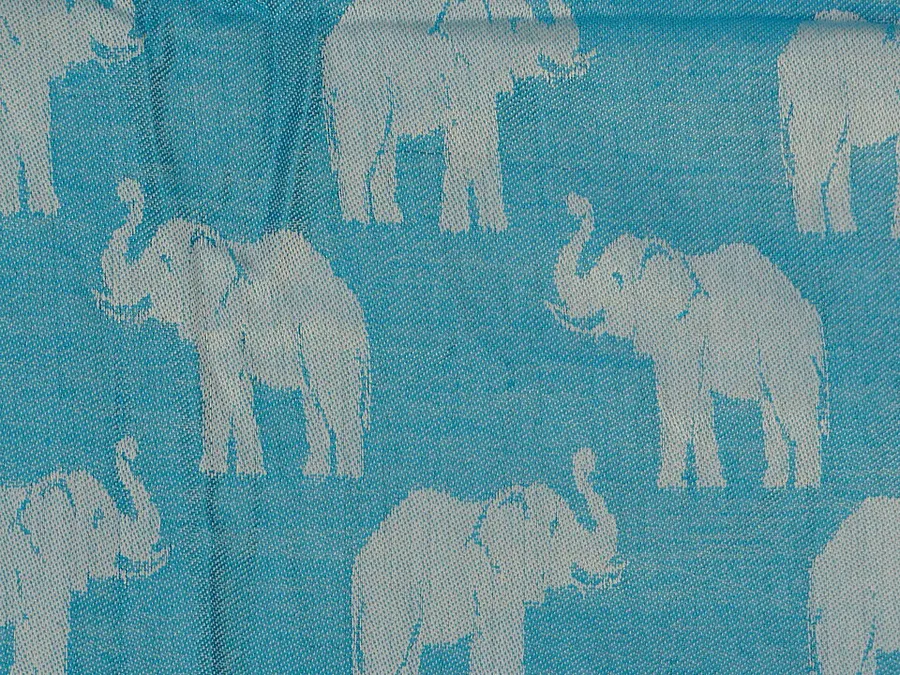
Pashmina sits in an awkward spot for a bulk buyer. It is one of the few handicraft categories where the product can be visually perfect, competitively priced, and still be the wrong thing entirely — because the value lives in a fibre you cannot see. This guide covers what actually determines pashmina quality, how to prove fibre content, and where the compliance lines sit.
What you are buying
Pashmina is the soft undercoat that a Changthangi goat grows to survive Himalayan winters and sheds each spring. It is combed out or collected from the shed fleece, dehaired to separate the fine down from the coarse guard hair, then spun. The dehairing step matters commercially: it is where most of the raw weight is lost, and how thoroughly it is done drives both the price and the prickle you feel against the neck.
Two production ecosystems dominate the trade:
- Kashmir and Ladakh (India). Raw pashmina comes off the Changthang plateau; spinning, weaving, dyeing, and embroidery are concentrated around Srinagar. The hand-spun, hand-woven end of this market is the most expensive pashmina in the world and the slowest to produce.
- Kathmandu Valley (Nepal). A large export-oriented industry built on Himalayan cashmere, with more machine spinning and power-loom capacity, faster turnarounds, and a wider range of blends. Nepal’s producers association operates a collective mark — Chyangra Pashmina — used to signal that goods meet its member standards.
Cashmere from Inner Mongolia and the Chinese and Mongolian steppe supplies most of the world’s volume and often supplies yarn into both ecosystems. There is nothing wrong with that, but it means “made in Nepal” and “Himalayan cashmere” are statements about where the cloth was woven, not necessarily where the goats grazed. Ask both questions separately.
Micron, grade, and what the number means
Fineness is expressed as mean fibre diameter in microns. Roughly:
| Fibre | Typical mean diameter |
|---|---|
| Pashmina (Changthangi) | ~12–16 µm |
| General commercial cashmere | ~15–19 µm |
| Superfine merino wool | ~17–19 µm |
| Standard merino | ~19–23 µm |
Two caveats before you write a micron number into a purchase order. First, a mean is a mean — the coefficient of variation and the percentage of coarse fibres above 30 µm determine whether a shawl feels soft or itchy, and a supplier quoting only the average is telling you the flattering half of the story. Second, micron is measured on the fibre, so it has to be tested on yarn or on fabric taken from your actual lot, not quoted from a mill’s generic spec sheet.
Provenance marks
Kashmir Pashmina is registered as a geographical indication in India. The GI framework works through registered authorised users, and a labelling and testing programme operates around it — so the meaningful question to a supplier is not “is it GI?” but “who is the registered authorised user for this consignment, and what does the label they applied certify?” Get the label reference recorded on the invoice.
Chyangra Pashmina is a collective trademark administered by Nepal’s pashmina industry association. It signals membership and adherence to the association’s product standards. Like any collective mark, its value depends on the administering body’s enforcement, so ask whether the mark was issued for your specific order.
Neither mark is a substitute for a fibre test. They tell you about origin and process governance; a lab report tells you what is in the cloth.
Blends, and why they are not a downgrade
A large share of the pashmina market is deliberately blended, most often with mulberry silk in a 70/30 pashmina-silk construction. Silk adds tensile strength, drape, and a subtle lustre, and it makes a lighter shawl that survives retail handling. Blends with merino, modal, or viscose exist further down the price ladder.
The commercial problem is never the blend. It is the undisclosed blend. Set your specification as a percentage, require the percentage on the label, and test against it — then a 70/30 becomes an honest product line rather than a dispute.
Construction and quality checks
- Weave. Hand-loom (kani and plain twill) versus power-loom. Hand-loom cloth shows slight irregularity in the weft and a softer hand; power-loom is more uniform and cheaper. Both are legitimate; specify which you bought.
- Count and weight. Specify GSM and finished dimensions with tolerances. Hand-woven pieces will vary; ±3–5% on dimensions and ±5% on weight is a reasonable band to negotiate rather than argue about later.
- Fringe. Hand-twisted fringes are slow and durable; cut-and-knotted fringes are fast and prone to unravelling. Decide, and put it in the spec.
- Embroidery. Sozni is fine needle embroidery worked in the round; tilla is metallic thread work. Check the reverse face — sloppy carry-threads across the back are the usual sign of rushed work.
- Dyeing. Require a colourfastness test to washing and to rubbing. Deep indigos and reds on protein fibres are the usual bleeders.
- Pilling. Short-staple, low-twist yarns pill. Run a Martindale or ICI pilling test on a sample if the product is going into a premium retail channel where returns are expensive.
Packing and pest control
Pashmina is keratin, which makes it moth food. Specify polybagging per piece, a moth-repellent sachet system your destination market allows, and a fumigation or heat-treatment certificate where required. Long sea legs through humid ports are the highest-risk phase; if you are shipping a high-value lot, the freight saving over air rarely justifies the risk of a mildew or infestation claim.
Compliance checklist
- Fibre content report from an accredited lab on your production lot, using microscopy-based methods for animal-fibre identification.
- Labelling to destination rules — US Wool Products Labeling Act, EU Regulation 1007/2011 fibre names, plus care and country of origin.
- No shahtoosh. Tibetan antelope is CITES Appendix I. Written confirmation on the supplier declaration.
- Dye and finishing chemistry — for EU-bound goods, confirm restricted azo colourants and other REACH Annex XVII restrictions are addressed.
- Classification. Shawls, scarves, and stoles generally sit in HS heading 6214, with the subheading turning on fibre composition. Blend percentages change the classification, so confirm with your customs broker using the final tested composition.
How to run the first order
Buy a small pre-production lot, send it to a lab, and treat the report as your golden sample reference — not the physical shawl alone. On repeat orders, test again on a sampling basis. Fibre substitution is the single most common failure mode in this category, and it is invisible to inspection at the warehouse. Everything else about pashmina buying is ordinary textile procurement; this one thing is not.
FAQ
What is the actual difference between pashmina and cashmere?+
Commercially, pashmina is a subset of cashmere. Both are the fine downy undercoat of a cashmere goat; pashmina refers to the fibre from Changthangi (Changra) goats reared on the high-altitude Changthang plateau in Ladakh and adjoining Himalayan ranges, which typically measures around 12–16 microns against the roughly 15–19 microns of general cashmere. Trade regulations in most markets recognise only 'cashmere' as a fibre name, so 'pashmina' functions as an origin and quality claim layered on top of it — which is precisely why it needs documentary support rather than a supplier's word.
How can I verify that a shawl is genuinely 100% pashmina and not a blend?+
Ask for a laboratory fibre-identification report rather than relying on handling tests. Animal fibres are distinguished by scale pattern and diameter under light microscopy and scanning electron microscopy, and the ISO 17751 series covers quantitative analysis of cashmere, wool, and other animal fibres by microscopy. A common substitution is viscose or a fine merino blend sold as pashmina; both are easy for a lab to spot and impossible to judge reliably by touch. The 'passes through a ring' test proves fineness of the yarn and weave, not the species of the fibre.
Is shahtoosh the same thing as pashmina?+
No, and the distinction is a legal one. Shahtoosh comes from the Tibetan antelope (chiru), a species listed on CITES Appendix I; the animal is killed to obtain the fibre and international commercial trade is prohibited. Pashmina is combed or shed from live domesticated goats and trades legally. Any supplier who offers shahtoosh, or who describes a shawl as shahtoosh-grade in a way that implies the real fibre, should be removed from your vendor list — possession alone is an offence in many destination markets.
What MOQ and lead time should I plan for on bulk pashmina orders?+
Plain woven and solid-dyed stoles are typically quoted at around 50–200 pieces per colourway because dyeing is done in lots and small lots waste dye bath capacity. Lead times of roughly 4–10 weeks are common for standard constructions once yarn is in hand. Labour-intensive work runs on a completely different clock: heavily sozni-embroidered pieces and Kani twill-tapestry weaving are measured in months per piece, so treat those as limited runs rather than repeatable stock lines.
What labelling do I need for pashmina entering the US or EU?+
In the United States, the Wool Products Labeling Act governs the disclosure of fibre content, and cashmere has a regulatory definition tied to the fine undercoat of the cashmere goat and its fibre diameter. In the EU, Regulation (EU) No 1007/2011 sets the reserved textile fibre names, so a blend must be declared by percentage using the permitted names. Country of origin marking and care labelling apply on top of fibre content. Get your factory's proposed label artwork approved by your customs broker before the first bulk run, not after the goods are on the water.
Ready to source?
Give GreenFlip your buying brief, budget and deadline. We turn it into an evidence-backed sourcing decision and an executable order.
Start a sourcing brief →