Pre-Shipment Inspection & AQL for Handicraft Orders
What pre-shipment inspection covers, why AQL sampling was built for factories rather than artisans, and how to set limits that handmade goods can meet.
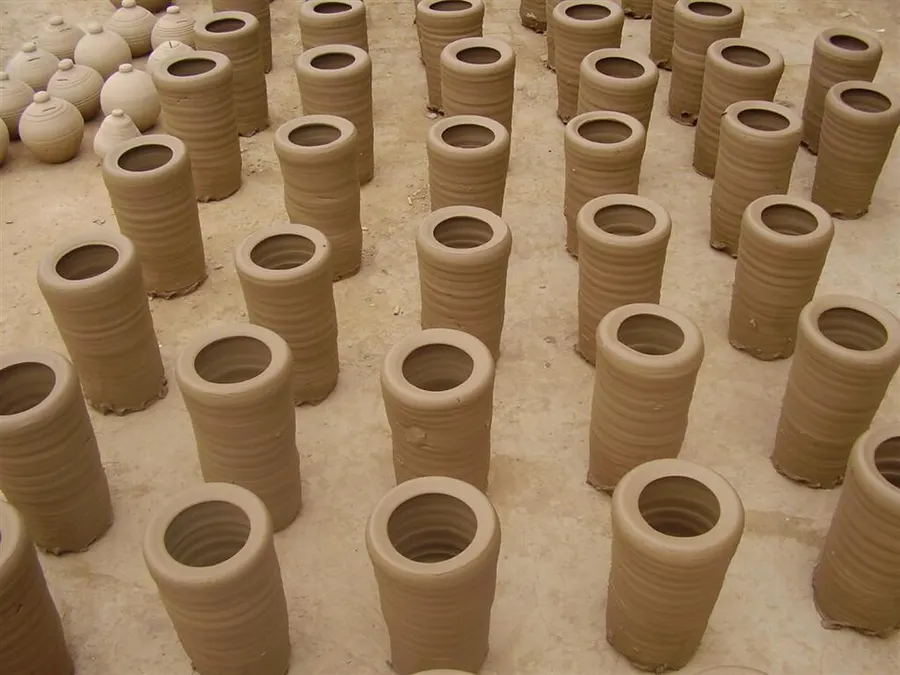
Pre-shipment inspection is your last reliable chance to catch defects, count units, and document condition before containers are sealed and payment is released. For handicrafts, the standard AQL (Acceptable Quality Limit) framework — built around factory output and statistical tolerances — often needs to be loosened or renegotiated, because artisan production has natural variation that machine sampling rules were never written for. Treat AQL as a conversation tool with your supplier, not a forensic standard, and pair it with a clear, photo-rich inspection report.
What pre-shipment inspection actually does
A pre-shipment inspection (PSI) is a physical check of finished, packed goods — typically when at least 80% of the order is produced and packed for export. A third-party inspector (or your own QC staffer) pulls a sample from the lot, compares it against an approved sample or reference spec, and records findings against your acceptance criteria. PSI answers four questions:
- Did the factory make the right quantity?
- Do the goods match the approved sample in materials, finish, color, and dimensions?
- Are defects within tolerances you and the supplier agreed to?
- Is the export packing — carton, inner packing, labels, barcodes — correct?
The report that comes out of this is also your evidence if you need to file a claim, request rework, or refuse the shipment at port.
AQL in plain terms
AQL is a statistical sampling system published in the ISO 2859-1 standard (also known as ANSI/ASQ Z1.4 in the US). It works like this: you pick a defect classification (Critical, Major, Minor), pick a sample size based on your lot, and the standard tells you how many defects you can accept before the lot fails. The “AQL” number — for example, 1.0 or 2.5 — is the worst percentage of defective items you are willing to tolerate in a “good” lot. The lower the AQL, the stricter the bar.
Most consumer-goods buyers use a default such as:
- Critical defects: AQL 0 (zero tolerance — safety, legal, functional failures)
- Major defects: AQL 1.0 or 2.5 (visible, functional, or commercial problems)
- Minor defects: AQL 2.5 or 4.0 (cosmetic, easily fixable)
The exact numbers depend on your industry, your customer, and how much risk you can absorb. Verify the current table values, sample-plan rules, and which edition is in force directly with ISO or your local national standards body before committing them to a contract.
Why standard AQLs punish handmade goods
AQL was designed for high-volume, repeatable manufacturing. A factory molding 50,000 plastic parts will hit tight tolerances lot after lot. A village co-op weaving 2,000 jute baskets or hand-painting 3,000 ceramic tiles cannot — and should not be judged as if it could.
Where the friction shows up:
- Unit-to-unit variation is intrinsic. A 2 mm glaze drip, a slightly uneven dye lot, or a knot placement 3 mm off the spec sheet is not a defect in the way a cracked weld is. The sample size required to verify a given defect rate on 2,000 hand-painted items is similar to that for 20,000 — but the underlying process is fundamentally more variable.
- “AQL 1.0” may be unmeetable. If the artisan group cannot physically hold that rate on a complex handmade SKU, you are buying constant rejections, disputes, and delays. You have not raised quality — you have just moved the goalposts off the page.
- Inspectors apply AQL mechanically. A third-party inspector with a tablet and the standard tables will not negotiate the philosophy of “handmade character” with you at the loading dock. You need to define what is and is not a defect before the inspection.
Setting sensible limits for handicrafts
You can still use AQL, but the way you set it for handmade goods is different:
- Split the SKU risk profile. Simple, repetitive hand-finished goods (printed tote bags, machine-sewn with hand embroidery) can usually take standard AQLs. Highly artisanal, near-one-off pieces should arguably be inspected 100%, or at minimum against a curated reference set rather than a statistical sample.
- Tighten on function, loosen on cosmetics. Push to a very low AQL — or zero tolerance — on anything that affects safety, food contact, structural integrity, or legal compliance (lead content, sharp edges, flammability for candles or textiles). Loosen on minor visual variation that buyers have already accepted as “handmade character.”
- Write a defect dictionary. A photo-based reference document showing what is a Critical, Major, or Minor defect for this specific product. “Slight color variation between pieces” — minor, allowed up to a defined tolerance. “Chip on rim” — major, rejects the unit. Without this, every inspector will interpret the rules differently.
- Adjust the AQL numbers upward for hand-process steps. Many handicraft buyers find that Major at 2.5 and Minor at 4.0 is the practical floor for genuinely handmade categories. Anything tighter usually means you are paying for goods that cannot be produced at your price point.
- Lock the standard and edition in the contract. State which AQL system (ISO 2859-1, current edition), which inspection level (General Levels I, II, or III; or Special Levels S-1 through S-4), and which AQL values you are using. Confirm the edition and any local equivalents with ISO or your national standards institute.
When to inspect in the production cycle
A single end-of-order PSI is the minimum. For handicrafts, the practical sequence is:
- Pre-production check (optional but valuable for new suppliers): confirm raw materials, dye lots, base materials, and the artisan’s understanding of the reference sample.
- During Production Check (DUPRO), at roughly 20–40% complete: catches misunderstandings before the whole lot is finished. Cheap insurance on a new vendor.
- Final Random Inspection (FRI) / PSI, at 80–100% packed: the decision-point inspection. The AQL sample is drawn from packed, finished cartons, not from the workshop floor.
- Loading supervision (optional): confirms the right containers, the right cartons, and the right quantities are actually loaded.
Skip steps only with a supplier whose previous five shipments have all passed cleanly.
What a good inspection report contains
A useful PSI report is more than a pass/fail page. It should include:
- Header data: order number, PO number, supplier, factory, inspector name and date, lot size, sample size drawn, AQL standard and edition used, inspection level.
- Product verification: photos of the reference sample next to the actual production sample, side by side, under consistent lighting.
- Quantity check: cartons inspected vs. total, packed quantity vs. PO quantity, any shortages or overages.
- Defect findings: a table listing each defect found, classified Critical / Major / Minor, with a clear photo of each. Total defects per class vs. the AQL acceptance number.
- Packing and marking check: inner packing, master carton, shipping marks, barcodes, labels, poly bags, silica gel — whatever your spec requires.
- Measurements and tests: dimensional checks against the spec sheet, any on-site tests performed (drop test, colorfastness swab, fabric GSM, weight of a ceramic piece).
- Inspector’s overall recommendation: Pass / Conditional Pass (rework needed) / Fail, with a short written justification.
- Photo appendix: wide shots of the lot, carton marks, packing configuration, and a clear photo of every defect recorded.
If any of these is missing, the report is too thin to use as a claim document later.
Bottom line
For handicraft orders, AQL is a useful but blunt tool — the sampling math is sound, but the defect tolerances built for factory output rarely fit artisan production. Set realistic AQLs, write a product-specific defect dictionary, inspect more than once on new suppliers, and demand a photo-rich PSI report. Verify the current edition of ISO 2859-1 and any local equivalents with your national standards body before locking numbers into a contract.
FAQ
Why does standard AQL sampling often give misleading results on handmade handicraft orders?+
AQL tables were built for controlled, repetitive factory production where defects are statistically rare events. Handmade goods naturally vary in color, shape, texture, and finish—not as defects but as inherent character—so applying factory AQL thresholds can unfairly reject acceptable artisanal variation and create constant disputes between importers and makers.
How should an importer set sensible defect limits for handmade goods?+
Classify defects as critical (safety, structural, or functional), major (clearly visible flaws that affect saleability), and minor (slight cosmetic variations), then agree on AQL limits with the supplier that are looser than factory norms—treating small irregularities as acceptable craft character rather than rejectable flaws, and documenting the agreed tolerance in the purchase specification.
When should pre-shipment inspection take place, and what should the report contain?+
Inspect when at least 80% of the order is finished, fully packed, and accessible in one location, drawing random samples from sealed cartons rather than loose stock. A useful report includes the PO reference, product description and photos, lot and sample size, defect counts by class, the AQL standard applied, pass/fail outcome, a clear recommendation (ship, rework, or reject), and timestamped photographs of every defect found.
Ready to source?
Give GreenFlip your buying brief, budget and deadline. We turn it into an evidence-backed sourcing decision and an executable order.
Start a sourcing brief →