Sourcing Krobo Recycled Glass Beads from Ghana
Buying Ghanaian powder-glass beads: how they are made, hole and size consistency, the recycled-glass question, strand versus kilo pricing and compliance.
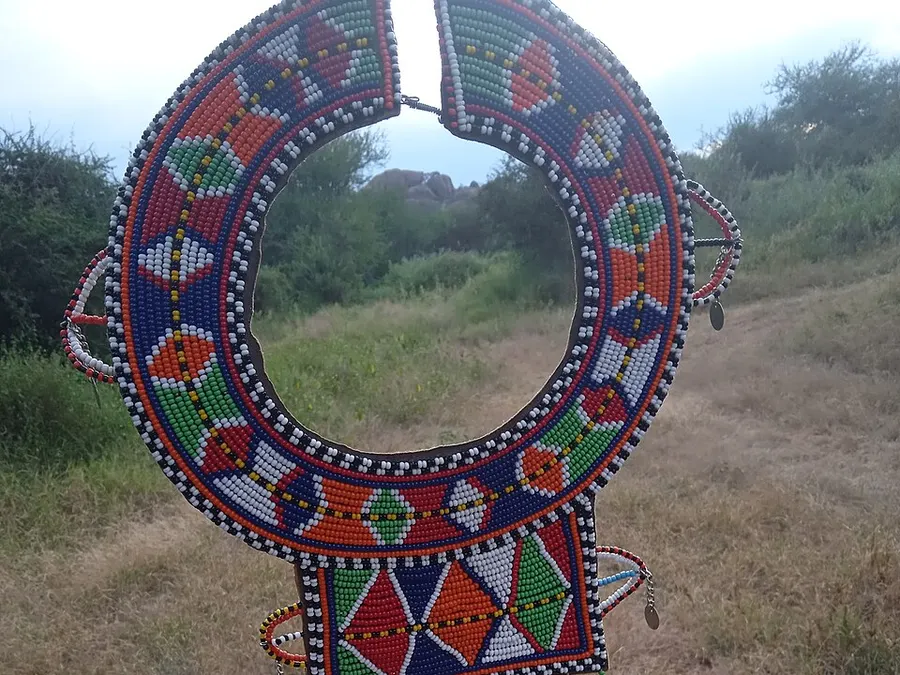
Krobo beads are made in the Eastern Region of Ghana, principally around Odumase-Krobo and Somanya, from recycled glass fired in clay moulds. They are one of the few craft categories where the recycling story is not a marketing overlay applied after the fact — the craft has used broken glass as its raw material for generations because that was the material available.
For a buyer, the category offers low minimums, distinctive product, and a genuine sustainability narrative. Its risks are narrow: variability, and the fact that the feedstock is glass of unknown provenance.
The process, and what it explains
Glass is collected, sorted by colour, and crushed — sometimes to a fine powder, sometimes left coarser for a different effect. The powder may be coloured with ceramic pigment. It is packed into moulds formed from local clay, with a cassava stalk set through each cavity to create the hole. The moulds go into a wood-fired kiln; the glass sinters and fuses while the stalk burns away. After cooling, the beads are ground flat and polished on a wet sandstone slab.
Everything that varies in the finished bead traces to a step in that process:
- Hole position and diameter vary because the stalk is placed by hand.
- Size variation comes from hand-packing the mould cavities.
- Colour variation comes from feedstock and from position in a wood-fired kiln with an uneven temperature profile.
- Surface texture depends on how far the polishing was taken.
None of this is a defect in itself. It becomes a defect when it falls outside a tolerance you agreed in advance.
Bead types
- Powder glass — the core product, opaque, made from finely crushed glass, often with painted or layered decoration applied before firing.
- Translucent and bodom — larger beads, traditionally yellow and high status, made with coarser glass for translucency.
- Painted beads — decoration applied with glass paint and refired.
- Fused bottle beads — chunkier, made from larger glass fragments with visible bottle colour.
- Strung finished goods — necklaces, waist beads, bracelets assembled locally.
Buying finished strung goods saves you assembly cost but ties you to the supplier’s design sense and stringing materials. Buying loose beads by weight gives you control over design and findings, and lets you place the compliance-critical metal components with a supplier you have qualified.
Specification
- Bead diameter and length, with tolerance.
- Hole diameter, minimum — driven by your stringing material.
- Colour, approved against a physical bead card.
- Finish level — as-fired, ground, or fully polished.
- Count per kilo, approximate.
- Acceptable reject rate, agreed in writing.
Compliance
Beads sold as or assembled into jewellery are regulated as jewellery:
- EU: REACH Annex XVII lead and cadmium restrictions for jewellery articles; nickel release limits tested to EN 1811 for any metal components in prolonged skin contact.
- US: CPSIA for children’s products — lead content limits, third-party testing, a Children’s Product Certificate, and tracking labels. Small parts requirements apply to loose beads and to anything that could detach. State-level jewellery materials rules and California’s Proposition 65 warning regime also come into play.
- Everywhere: accurate material description and country of origin marking. “Recycled glass beads, handmade in Ghana” is both accurate and the strongest thing you can say about the product.
Because the feedstock is recycled glass of mixed origin, treat heavy-metal testing as a per-lot cost rather than a one-off qualification, and ask your supplier how they source and segregate glass. Suppliers who buy sorted bottle glass from a known collector are in a different risk position from those buying mixed cullet.
Commercial practicalities
Minimums are low — this is a craft of small workshops and family compounds, and a first order of a few kilos per colour is normal. Lead times of 3–6 weeks are typical, with the constraint being kiln firings rather than labour. Regional bead markets, notably the large weekly market at Koforidua, are where much of the trade consolidates, which is worth knowing because it means a trader can assemble an order they did not make. If provenance matters to your story, buy from a workshop and say so; if price matters more, buying through the market is legitimate but do not claim a single-workshop origin.
Beads are heavy for their volume. Ship in double-bagged cartons with the weight kept per carton to something a person can lift, and expect freight to be charged on weight rather than cube. Strung goods should be shipped strung on a temporary cord unless the retail cord is specified — restringing on arrival costs more than shipping loose.
FAQ
How are Krobo beads actually made?+
Recycled glass — bottles, window and vehicle glass, and old beads — is crushed to a powder, sometimes coloured with ceramic pigment, and packed into moulds made from local clay. A stalk of cassava is set through the middle of each cavity; when the moulds are fired in a wood-burning kiln the glass fuses and the stalk burns away, leaving the hole. The beads are then ground and polished on a wet stone with sand. The process is why hole placement and size vary more than in machine-made beads, and why every bead is genuinely individual.
Do recycled glass beads carry a lead risk?+
It deserves testing rather than assumption. The feedstock is recycled glass of mixed and often unknown origin, and some historical glass types contain lead. Any beaded product entering the EU has to meet the REACH Annex XVII restrictions on lead and cadmium in jewellery, and children's jewellery entering the United States falls under CPSIA lead limits with third-party testing at a CPSC-accepted laboratory. Test at the bead level on production lots, not once at sampling, because feedstock changes between firings. A supplier who segregates and documents their glass sources is worth paying more for.
Should I buy by strand or by weight?+
Both conventions exist and they are not equivalent. Strands are the traditional trade unit and are convenient for buyers reselling strung product, but strand length and bead count vary between suppliers. Buying by the kilo makes price comparison honest, but you then need bead count per kilo to plan production. The workable approach is to quote by weight, specify bead diameter and hole diameter with tolerances, and require an approximate count per kilo — then a price comparison across three suppliers actually means something.
What quality problems should I inspect for?+
Check hole consistency first: holes must be open, roughly centred, and large enough for your stringing material, and blocked or off-centre holes are the most common cause of unusable beads in a lot. Then look for sharp or unpolished edges around the hole, size and diameter variation beyond your tolerance, colour drift across the batch, cracks and internal bubbles that weaken the bead, and unfused powder patches. Count the reject rate on a sample kilo and price it into your landed cost rather than arguing about it later.
How does this differ from Maasai beadwork?+
Completely — different country, material, and supply chain. Krobo beads are made in Ghana from recycled glass and are a bead-making craft; Maasai beadwork in Kenya and Tanzania is a bead-stitching craft using imported Czech or Japanese seed beads. They are frequently conflated in export catalogues and in retail copy, which is both inaccurate and a missed commercial opportunity, because each has a genuine and distinct story. Buy them as separate categories from separate suppliers.
Ready to source?
Give GreenFlip your buying brief, budget and deadline. We turn it into an evidence-backed sourcing decision and an executable order.
Start a sourcing brief →