Sourcing Maasai Beadwork in Bulk: A Buyer's Guide
Buying Kenyan and Tanzanian beadwork at wholesale — bead types, colour meaning, pricing by bead count, cultural attribution, and lead, cadmium, and nickel compliance
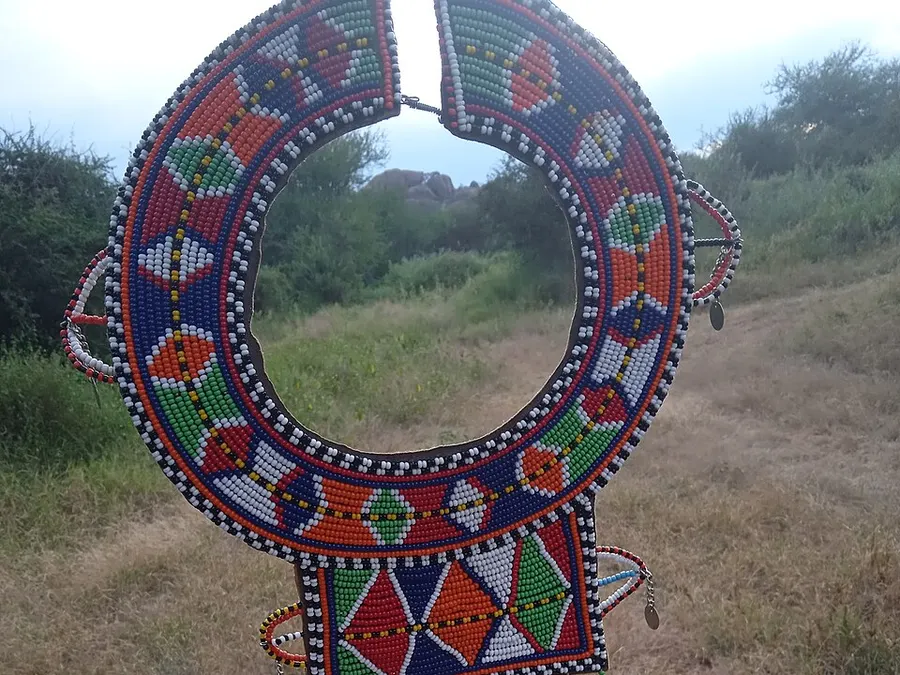
Beadwork is one of the easiest handicraft categories to buy badly. The pieces are inexpensive, photograph beautifully, and ship light — which tempts buyers into placing volume orders before they have settled bead specification, cultural attribution, or jewellery compliance. Each of those three can sink a programme after the goods land.
What the craft actually is
Maasai beadwork is glass seed-bead work made predominantly by women, historically as personal and ceremonial adornment: collars, chokers, cuffs, belts, and decorated gourds and hides. Contemporary export production extends the same techniques to jewellery lines, homeware trim, sandal and bag detailing, and decorative panels.
The beads themselves are almost always imported glass — Czech and Japanese seed beads dominate the trade today, as Venetian trade beads did historically. This surprises buyers who expect a wholly local material chain, but it has been true for well over a century, and it matters commercially: bead cost and availability are set by importers in Nairobi or Arusha, not by the artisan group, and a bead shortage will stop production regardless of how well your order is going.
Craft output is concentrated in Kenya and northern Tanzania. Ghana has a separate and distinct bead tradition built on recycled powder-glass beads made in Krobo, which is a different material, a different look, and a different supply chain — do not let a catalogue conflate the two.
Reading a specification
Get these five things on paper before you quote:
- Bead size. Seed beads are sized by aught: 6/0 is large, 11/0 is the common fine size, 15/0 is very fine. Smaller number of aughts equals bigger bead. Bead size is the biggest single driver of hours per piece.
- Bead finish. Opaque, transparent, silver-lined, galvanised, dyed, matte. Galvanised and surface-dyed finishes look brilliant on day one and can wear or fade with skin contact and abrasion — a legitimate choice, but one to make deliberately for the retail channel you are serving.
- Stitch or construction. Wire-strung, thread-stitched (peyote, brick, herringbone), loom-woven, or bead-embroidered onto a backing. Thread choice matters: nylon monofilament and bonded nylon thread survive retail handling far better than cotton.
- Backing and findings. Leather, faux leather, or fabric backings; metal clasps, jump rings, and posts. Findings are the usual compliance failure point because they are bought in, not made.
- Bead count or coverage. Either an approximate count per piece or the finished dimensions of the beaded area. This is your objective measure of the work you are paying for.
Quality inspection
- Tension and thread. Flex the piece. Beads should sit evenly with no slack loops and no exposed thread bridging.
- Knot security and finishing. Ends should be worked back into the beading, not knotted and trimmed at the surface.
- Symmetry against the approved sample. Handmade beadwork varies; define the tolerance in bead-rows rather than millimetres, which is how the maker thinks about it.
- Findings function. Every clasp opened and closed. Cheap lobster clasps fail in retail more often than any part of the beadwork.
- Colour against the approved bead card, checked under the same lighting each time.
Compliance
Beaded jewellery is regulated as jewellery, not as handicraft, and this catches new buyers out.
- EU: REACH Annex XVII restricts lead and cadmium in jewellery articles and limits nickel release from items in prolonged skin contact, with nickel release tested to EN 1811. Leather components bring the chromium VI limit into scope.
- US: children’s jewellery falls under the CPSIA — lead content limits, testing at a CPSC-accepted third-party lab, a Children’s Product Certificate, and tracking labels. Small parts and choking hazards apply to anything marketed for children. Some states impose their own jewellery-materials rules on top of the federal baseline; California’s Proposition 65 warning regime is the one most often encountered on imported jewellery.
- Everywhere: country of origin marking, and honest material description — “glass beads on leather” rather than “beaded”.
Build the testing cost into your landed cost from the first order. A cooperative cannot absorb it, and discovering it after the container is booked is how programmes get cancelled.
Buying ethically, in a way you can evidence
This category carries reputational risk in both directions: the story is a large part of the retail value, and a story that turns out to be untrue is worse than no story. Practical steps:
- Source from a named, registered group — a women’s cooperative, a self-help group, or a social enterprise with a legal identity you can look up.
- Record the group name, location, and membership size, and use those specifics in your product copy instead of generic “empowering artisans” language.
- Ask how artisans are paid: per piece, hourly, or through a group distribution. Ask what the piece rate is. If nobody can tell you, you do not have supply chain visibility.
- If you plan to use the Maasai name commercially, look into the licensing initiative operating on the community’s behalf before you print packaging.
- Keep photographs and consent records for any artisan images you plan to use in marketing.
Logistics
Beadwork is light and low-volume, which makes air freight genuinely viable for a first order and for seasonal replenishment — an unusual luxury in handicrafts. Specify individual polybagging to prevent tangling and abrasion in transit, and a card or foam insert for collars so they arrive flat rather than creased. Glass beads are heavier than they look in bulk; check chargeable weight before assuming air is cheap.
Classification depends on construction and materials rather than on the craft label, so confirm the heading with your broker using the actual bill of materials — imitation jewellery, glass articles, and leather goods headings all come into play depending on the piece.
FAQ
Why does beadwork pricing vary so much between suppliers for what looks like the same piece?+
Beadwork is priced by labour, and labour scales with bead count and stitch type, not with the size of the finished piece. A wide collar built from size 11/0 seed beads in a peyote or brick stitch can hold several thousand beads and take days; a similar-looking collar strung on wire with size 6/0 beads takes an hour. Ask for the bead size, the stitch, and an approximate bead count per piece, and the price differences usually resolve into something rational.
What compliance testing does beaded jewellery need for the US and EU?+
For adult jewellery entering the EU, the relevant restrictions sit in REACH Annex XVII: lead and cadmium content limits for jewellery articles, and nickel release limits for items in prolonged skin contact, tested to EN 1811. For the United States, children's jewellery falls under the CPSIA with lead content limits, third-party testing by a CPSC-accepted lab, and a Children's Product Certificate; small detachable beads also raise small-parts choking requirements. Leather backings and cords bring their own chromium VI question for EU-bound goods.
Are there cultural or intellectual property issues in selling beadwork described as Maasai?+
Yes, and they deserve real attention. The Maasai name and visual identity have commercial value that has historically been used without benefit to Maasai communities, and an intellectual-property initiative exists to license that identity on behalf of the community. As a buyer, the defensible position is to source from Maasai-owned or Maasai-staffed cooperatives, name the specific group and location in your product copy, pay a price you could publish, and avoid describing goods as Maasai when they were not made by Maasai artisans.
What MOQ and lead time is realistic for beaded pieces?+
Cooperatives typically work in small batches, so MOQs of 20–100 pieces per design are common and often lower than in other craft categories. Lead times of 3–8 weeks are usual, driven by how many artisans a group can put on your order at once rather than by machine capacity. That structure means volume scales by adding artisans, which is slower and less linear than adding a shift in a factory — plan repeat orders early rather than expecting a group to double output on short notice.
How do I get colour consistency across a repeat order?+
Seed beads come in dye lots, and colour can shift measurably between lots of the same nominal colour, particularly in dyed and lined finishes rather than solid opaque glass. The practical fix is to have the cooperative buy the full bead quantity for a season's orders in one purchase, hold it, and produce against that stock. Approve a physical bead card, not a digital colour reference, and accept that surface-dyed and galvanised finishes will also wear differently over time.
Ready to source?
Give GreenFlip your buying brief, budget and deadline. We turn it into an evidence-backed sourcing decision and an executable order.
Start a sourcing brief →